
Custom box inserts are one of the most important parts of product packaging, but they are often overlooked in the early planning stage. Many brands focus first on the outer box style, printing, or finishing, while the inside fitment is treated as a secondary detail.
That is usually a mistake.
A well-designed insert does much more than hold a product in place. It helps reduce movement during shipping, improves product presentation, supports a cleaner unboxing experience, and makes the packaging feel more complete and professional.
For electronics, cosmetics, fragrance, jewelry, candles, and gift sets, the insert often determines whether the packaging feels secure and premium or weak and unfinished.
In this guide, we explain what custom box inserts are, the main material options, and how to choose the right insert for your packaging project.
What Are Custom Box Inserts?
Custom box inserts are fitted internal packaging components designed to hold products securely inside a box. They are made according to the size, shape, weight, and protection needs of the product.
Unlike generic fillers, custom inserts are built to create a more accurate fit. This helps keep products stable during shipping and storage while also improving internal presentation when the box is opened.
Depending on the product and packaging goal, inserts can be made from materials such as foam, EVA, velvet-covered board, molded pulp, or paperboard. For brands comparing insert materials and fitment options, our Custom Inserts page gives a clearer overview of available structures and packaging applications. Each material has different strengths in terms of protection, appearance, structure, and cost.
If your product includes fragile parts, multiple accessories, glass components, or premium presentation requirements, a custom insert is often essential rather than optional.
Why Custom Inserts Matter in Packaging
A custom insert is not just an accessory inside the box. It affects protection, product organization, brand perception, and even packing efficiency.
The main benefits of custom box inserts include:
- Better product protection during shipping and storage
- Reduced movement inside the box
- Cleaner internal presentation
- Better organization for multiple components
- A more premium unboxing experience
- More suitable support for fragile, shaped, or high-value products
For many brands, the insert is what makes a rigid box, drawer box, or gift box feel complete. If you are developing premium packaging with a stronger outer structure, you can also explore our Custom Rigid Boxes for more presentation-focused packaging options. Without the right insert, even a premium outer box can look unfinished or fail to protect the product properly.
Common Types of Custom Box Inserts
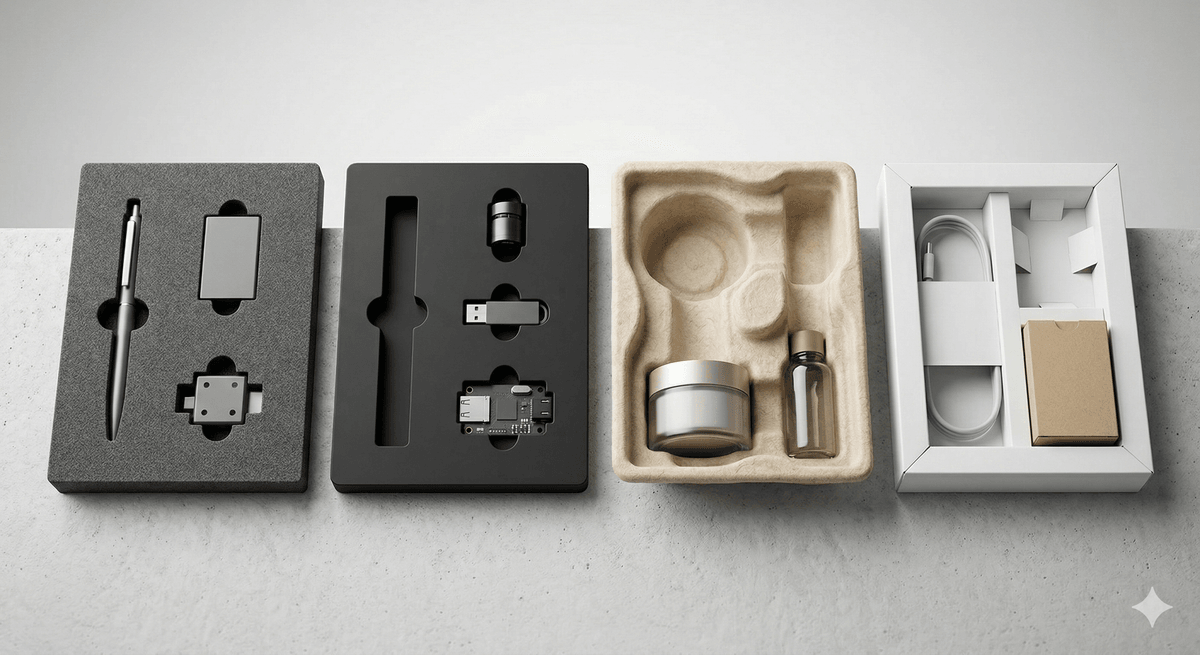
The most common insert materials used in custom packaging are foam, EVA, velvet, molded pulp, and paperboard. Each one fits different products, budgets, and brand positioning.
1. Foam Inserts
Foam inserts are widely used when the main goal is shock absorption and secure product placement. They are commonly used for electronics, tools, accessories, glass items, and products with irregular shapes.
Foam can be cut into custom cavities to match the product closely, which helps reduce internal movement and improve protection.
Best for:
- Electronics and accessories
- Fragile products
- Products with multiple parts
- Protective transit packaging
Advantages:
- Good cushioning performance
- Flexible for different product shapes
- Suitable for protective packaging layouts
- Helps reduce damage risk during transportation
Considerations:
- The look is more functional than luxury
- Material choice affects overall presentation and cost
2. EVA Inserts
EVA inserts are one of the most common premium insert options in custom rigid boxes. Compared with standard foam, EVA usually offers a cleaner cut, more refined appearance, and better perceived quality.
It is often used for electronics, skincare sets, jewelry, premium accessories, and gift packaging where both protection and presentation matter.
Best for:
- Premium electronics packaging
- Cosmetics and skincare sets
- Jewelry and accessories
- Gift box packaging
Advantages:
- Strong protection with cleaner presentation
- Accurate die-cut cavities
- Smooth and more premium appearance
- Suitable for high-end retail packaging
Considerations:
- Usually more expensive than simple foam
- Better suited to projects where presentation matters, not only transit protection
3. Velvet Inserts
Velvet inserts are typically used when the goal is a softer, more luxurious interior presentation. They are common in jewelry boxes, watch boxes, premium gift boxes, and some fragrance packaging.
The velvet surface helps create a refined look and can increase the perceived value of the product inside the box.
Best for:
- Jewelry packaging
- Watches and accessories
- Luxury gift sets
- Premium presentation-focused packaging
Advantages:
- Soft and elegant appearance
- Improves premium perception
- Good for delicate small products
- Works well in luxury rigid box packaging
Considerations:
- More presentation-oriented than heavy-duty protective
- Not always the best choice for larger or heavier products
4. Molded Pulp Inserts
Molded pulp inserts are a practical option for brands that want a more eco-friendly packaging direction. They are commonly used for electronics, home goods, bottles, jars, and products that need structured support with a recyclable material option.
Molded pulp can provide good protection while supporting sustainability goals, especially for brands that want to reduce plastic-based packaging components.
Best for:
- Eco-conscious brands
- Electronics packaging
- Bottles, jars, and shaped products
- Protective packaging with recyclable materials
Advantages:
- Recyclable material option
- Good structural support
- Suitable for protective internal packaging
- Stronger sustainability positioning
Considerations:
- Surface appearance is usually less refined than EVA or velvet
- Better for practical protection than luxury presentation
5. Paperboard Inserts
Paperboard inserts are a cost-effective and versatile option for many folding cartons and rigid boxes. They are often used for cosmetics, skincare, candles, lightweight electronics accessories, and gift sets.
They can be designed as folded trays, partitions, layered holders, or structured cavities depending on the product layout.
Best for:
- Cosmetics and skincare
- Lightweight retail products
- Gift sets
- Cost-sensitive custom packaging projects
Advantages:
- Cost-effective
- Easy to integrate into paper packaging
- Suitable for printed or branded internal layouts
- Better for lightweight products and organized presentation
Considerations:
- Less cushioning than foam or EVA
- Not ideal for heavy or highly fragile items without additional support
Which Insert Material Is Best for Different Products?
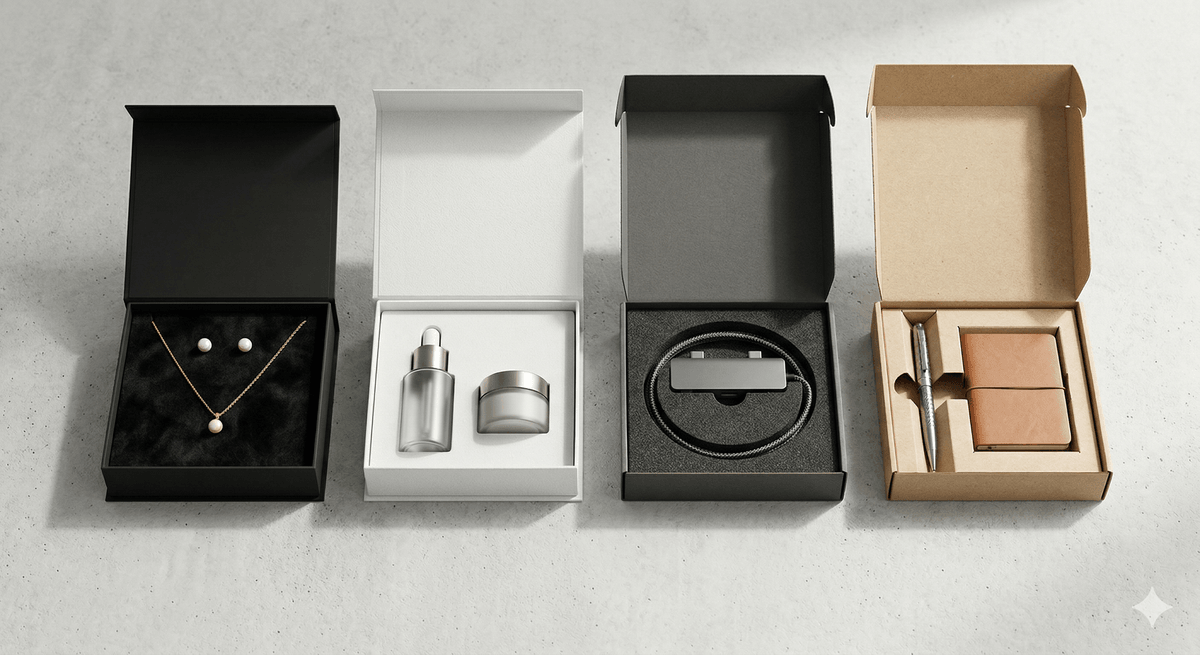
The right insert depends on what you are packing, how fragile it is, how premium the brand positioning is, and what level of protection is required.
Here is a simple way to think about it:
- Electronics and accessories: EVA inserts, foam inserts, or molded pulp inserts
- Jewelry and watches: velvet inserts or EVA inserts
- Cosmetics and skincare sets: paperboard inserts, EVA inserts, or molded pulp inserts
- Perfume and fragrance packaging: EVA inserts, velvet inserts, or molded pulp inserts
- Candles and gift sets: paperboard inserts, EVA inserts, or molded pulp inserts
- Lightweight retail products: paperboard inserts
- Fragile shaped products: foam inserts or EVA inserts
If the insert needs to deliver both strong protection and premium presentation, EVA is often the most balanced option. If the project is more cost-sensitive or sustainability-focused, paperboard or molded pulp may be the better direction.
How to Choose the Right Custom Insert
Many buyers choose inserts too quickly based on appearance alone. That leads to avoidable problems later, especially when samples, shipping tests, or mass production start.
To choose the right insert, look at these five factors first:
1. Product Weight and Fragility
A light cosmetic item and a fragile glass bottle do not need the same insert structure. Heavier or breakable products usually need stronger support and better cavity control.
2. Brand Positioning
If the packaging needs to feel premium, the insert cannot look like an afterthought. For luxury or gift-oriented packaging, EVA or velvet usually creates a better internal presentation than a simple generic insert.
3. Shipping Conditions
If the product will be shipped internationally, sold through e-commerce, or handled through multiple stages of logistics, protection becomes more important. In those cases, fit and shock absorption matter more.
4. Sustainability Goals
If the brand wants more recyclable or paper-based packaging, molded pulp or paperboard inserts may be more suitable than foam-based materials.
5. Budget and MOQ
Not every project needs the most premium insert. Sometimes a well-structured paperboard insert is the better commercial decision than a more expensive luxury option. The right choice should balance cost, presentation, protection, and production feasibility.
Custom Inserts and Box Style Should Be Planned Together
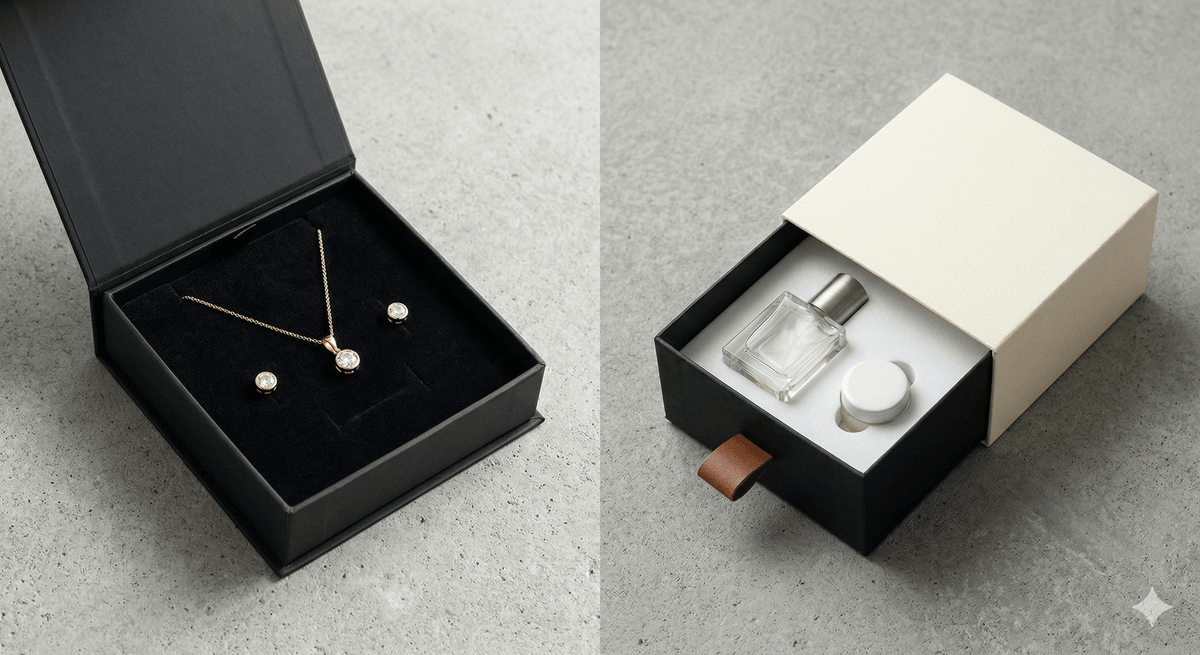
One common mistake is treating the box and insert as two separate decisions.
In reality, the insert should be planned together with the outer packaging structure. The internal fit affects box depth, cavity size, product positioning, opening experience, and packing efficiency.
For example:
- Rigid boxes often pair well with EVA, velvet, molded pulp, or paperboard inserts
- Drawer boxes benefit from inserts that keep the product centered and visible during the slide-out opening
- Folding cartons usually work better with lighter paperboard or molded pulp insert solutions
- Electronics packaging often requires a balance between protective fit and clean presentation
That is why insert development should start early, not after the outer box has already been finalized.
Why Work With QX Packs for Custom Inserts
QX Packs provides custom box inserts for rigid boxes, gift boxes, folding cartons, and other custom packaging projects. Insert options include EVA, foam, velvet, paperboard, and molded pulp, depending on the product, structure, and presentation goal. The brand positioning and current product pages already focus on factory-direct custom packaging, flexible structure support, and material-based packaging solutions, so this article fits that direction naturally.
Since 2004, QX Packs has supported global brands with packaging development, sampling, and production support for electronics, cosmetics, jewelry, fragrance, gift sets, and other retail categories. The current site also already positions Custom Inserts, Custom Rigid Boxes, and industry packaging pages as core conversion paths, so this blog should directly support those pages with internal links.
If your product needs a better internal fit, more premium presentation, or safer packaging for shipping, custom inserts can make a major difference in both protection and perceived value.
Frequently Asked Questions
What is the best insert material for premium packaging?
EVA and velvet inserts are usually the most common choices for premium packaging because they provide a cleaner and more refined internal presentation.
Are paperboard inserts good enough for product protection?
They are suitable for many lightweight products, gift sets, and organized retail packaging, but for heavier or more fragile items, EVA, foam, or molded pulp may provide better protection.
Are molded pulp inserts eco-friendly?
Molded pulp is widely used as a recyclable insert option for brands that want more sustainable packaging solutions.
What insert is commonly used for electronics packaging?
Foam, EVA, and molded pulp inserts are common choices for electronics packaging, depending on the product fragility, positioning, and protection needs.
Should the insert be developed together with the box?
Yes. The insert and the box structure should be planned together to ensure proper fit, presentation, and production efficiency.
Conclusion
Custom box inserts are not a minor packaging detail. They are a key part of how the product is protected, displayed, and experienced by the customer.
The best insert material depends on your product, packaging style, shipping needs, brand positioning, and budget. Foam, EVA, velvet, molded pulp, and paperboard all serve different purposes, and the right option should be chosen based on actual packaging requirements rather than appearance alone.
If you are developing custom packaging for electronics, cosmetics, jewelry, fragrance, candles, or gift sets, choosing the right insert early can help avoid fit problems, reduce damage risk, and improve the final presentation.
If you are still comparing structures, materials, and internal fit options, you can also review our Custom Inserts and Custom Rigid Boxes pages for more project-specific ideas.
Related Packaging Insert Guides
Choosing the right insert requires balancing protection, presentation, cost, and production feasibility. Use these guides to plan your next step.
Need help choosing the right insert?
Send your product size, weight, packaging style, quantity, and insert requirements to QX Packs on WhatsApp. Our team will review your product details and suggest a suitable insert structure.
For a formal quotation, you can also submit your project details through our Contact Us page.