
Confirm what should stay the same, what needs to change and which reference your next order should follow.
“Please make the same boxes as last time” sounds like a clear reorder instruction.
But the first sample, the final approved specification and the boxes delivered may represent different stages of the previous project. Adjustments may have been agreed during production, or feedback may have been raised after delivery.
A custom packaging reorder should therefore begin with one decision: what exactly should the next batch repeat?
Once that reference is clear, the buyer and manufacturer can review changes without reopening the entire packaging design.
Identify the Batch You Want to Repeat
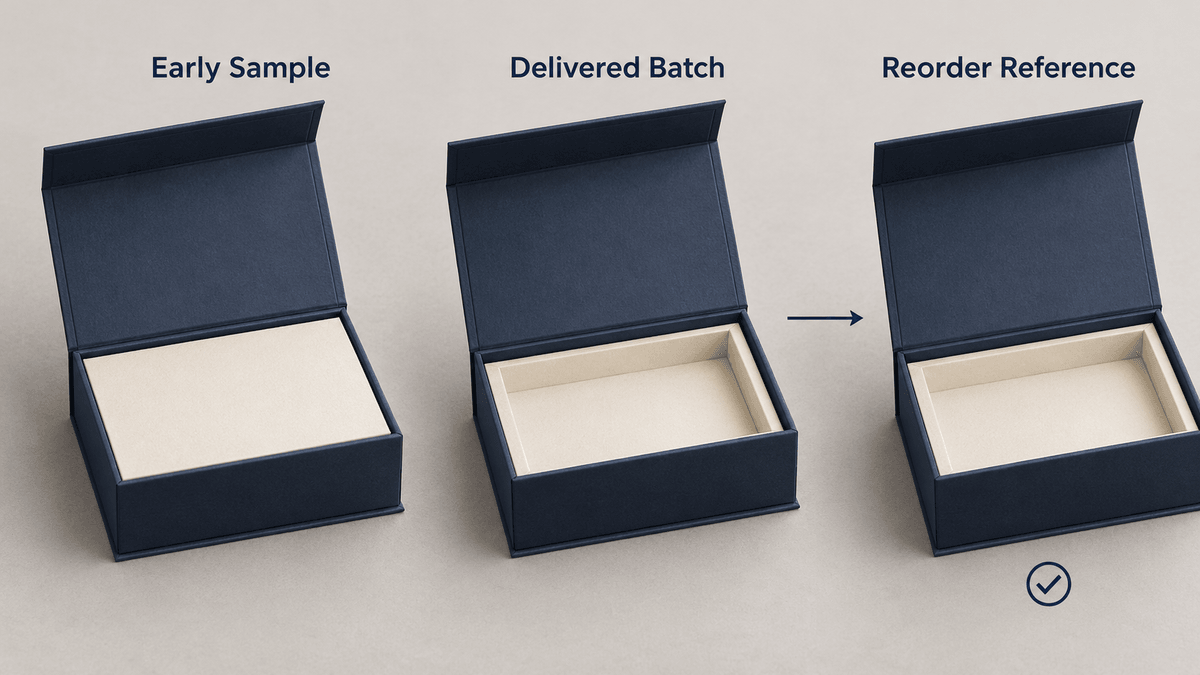
Start with the previous order reference and connect it to the packaging you intend to order again.
If several batches have been produced, identify the relevant one. “The previous design” may refer to the original launch packaging, while your purchasing team expects the most recent delivery.
A representative box from that delivery can help clarify the intended result. Check it against the final approved records, particularly where changes were made after the first sample.
For example, the insert depth may have been adjusted before production. An early sample could still show the original depth, while the delivered boxes reflect the correction.
If those references disagree, resolve the difference before confirming the reorder. State which version the next batch should follow rather than leaving production to interpret conflicting information.
Separate Previous Feedback from Approved Changes
Feedback after delivery does not automatically define the next production specification.
A buyer might report that an insert feels too tight, a ribbon is difficult to grip or the product sits lower than expected. Those observations identify a concern, but they do not establish the approved correction.
Before reordering, decide whether each issue should be:
- Repeated as previously supplied.
- Corrected through an agreed adjustment.
- Reviewed further before the order is confirmed.
For example, “make the insert easier to use” leaves the required result unclear. A more useful instruction identifies where removal is difficult and asks for a proposed adjustment for approval.
Keep an unresolved issue open until both sides agree on the change. Do not describe the whole order as “unchanged” while expecting an unconfirmed improvement.
Review What Has Changed Since the Last Order
The packaging may look the same while the product or supply requirements have changed.
Product Changes
Confirm whether the product supplied for the next batch still matches the one used to approve the existing packaging.
A revised connector, different cap, thicker protective sleeve or additional accessory can affect fit even when the product model name remains unchanged.
If the product has changed, identify the difference before approving a repeat of the existing box or custom insert. Review the affected parts together rather than assuming the outer box can remain unchanged.
Material or Component Changes
Ask the manufacturer to confirm whether the previously specified materials and components remain available.
If a replacement is proposed, record it as a change requiring review. Similar colour or appearance alone does not establish equivalence.
Identify the proposed replacement, the requirement it must meet and the reference needed for approval. Avoid approving an unspecified “similar material” when the previous finish or construction matters to the packaging.
Order and Delivery Changes
A different quantity, packing arrangement or delivery destination belongs to the new order confirmation, even if the packaging design stays the same.
Make these changes visible rather than carrying forward previous instructions by assumption. The current quotation and delivery arrangements should reflect the order being placed now.

Use One Reorder Comparison Record
A short comparison record helps both sides distinguish an exact repeat from an order containing approved changes.
Use the following format with actual project information:
| Item | Previous approved requirement | Next-order decision | Approval reference |
|---|---|---|---|
| Box construction | Identify the version being repeated | Unchanged or describe the adjustment | Relevant drawing, sample or written confirmation |
| Product and insert fit | Identify the product and insert previously approved | Confirm unchanged or state the product revision | Fit review or updated sample, where agreed |
| Artwork | Identify the artwork used for the selected batch | Repeat or identify the replacement | Approved artwork for this order |
| Materials and components | Identify the agreed specification | Repeat or review a proposed substitute | Approved material or component reference |
| Previous delivery feedback | Record any unresolved concern | Accept, correct or investigate | Written decision and approved correction |
| Bulk packing | Identify the previous arrangement | Repeat or state the new requirement | Current packing instruction |
Avoid marking an item “unchanged” simply because no one has discussed it.
Where a change needs further evidence, agree whether that means an updated proof, a material reference or a physical sample. For detailed physical checks, use the packaging sample approval guide.
Confirm Exceptions Before Releasing the Order
The final reorder instruction should make any exceptions easy to find.
For example:
Repeat the packaging supplied under the identified previous order, except for the changes listed in the approved reorder comparison record.
This wording is useful only when the previous reference and listed changes are clear. Any proposed adjustment still awaiting approval should remain outside the production release.
Keep optional redesign ideas separate. A discussion about a future premium finish should not accidentally replace the specification for an urgent repeat order.
Once the exceptions are resolved, purchasing and production should be able to identify the same required result from the order records.
Frequently Asked Questions
What if we no longer have a box from the previous delivery?
Start with the previous order reference and available approval records. Ask the manufacturer what supporting references remain available. If an important detail cannot be established, agree on a new reference before treating the order as an exact repeat.
Can we request an improvement while keeping everything else unchanged?
Yes, but define the improvement separately and confirm its effect on connected parts. For example, changing an insert may affect product position or lid clearance. Record both the approved adjustment and the requirements that remain unchanged.
Review Your Packaging Reorder
QX Packs is a custom packaging manufacturer in Shenzhen, China, since 2004.
Planning another order of your custom folding boxes, rigid boxes or packaging with inserts?
Send your previous order reference, photos of the packaging you want to repeat, quantity per design and any changes or unresolved feedback for review.
MOQ: 1,000 pcs per design. Projects at 500 pcs per design are reviewed individually.