
What Affects the Cost of Custom Rigid Boxes?
When sourcing custom packaging, buyers often ask one important question first: How much does a custom rigid box cost?
There is no single standard price because custom rigid boxes are made according to the product, box size, structure, materials, finishes, insert and order quantity. Two boxes that look similar in a photograph may have very different production requirements and costs.
To receive a useful quotation, buyers need to compare the same specifications—not only the overall appearance of the box.
This guide explains the main factors that affect custom rigid box cost and shows how packaging buyers can prepare clearer information before requesting a quotation.
1. Box Size and Board Usage
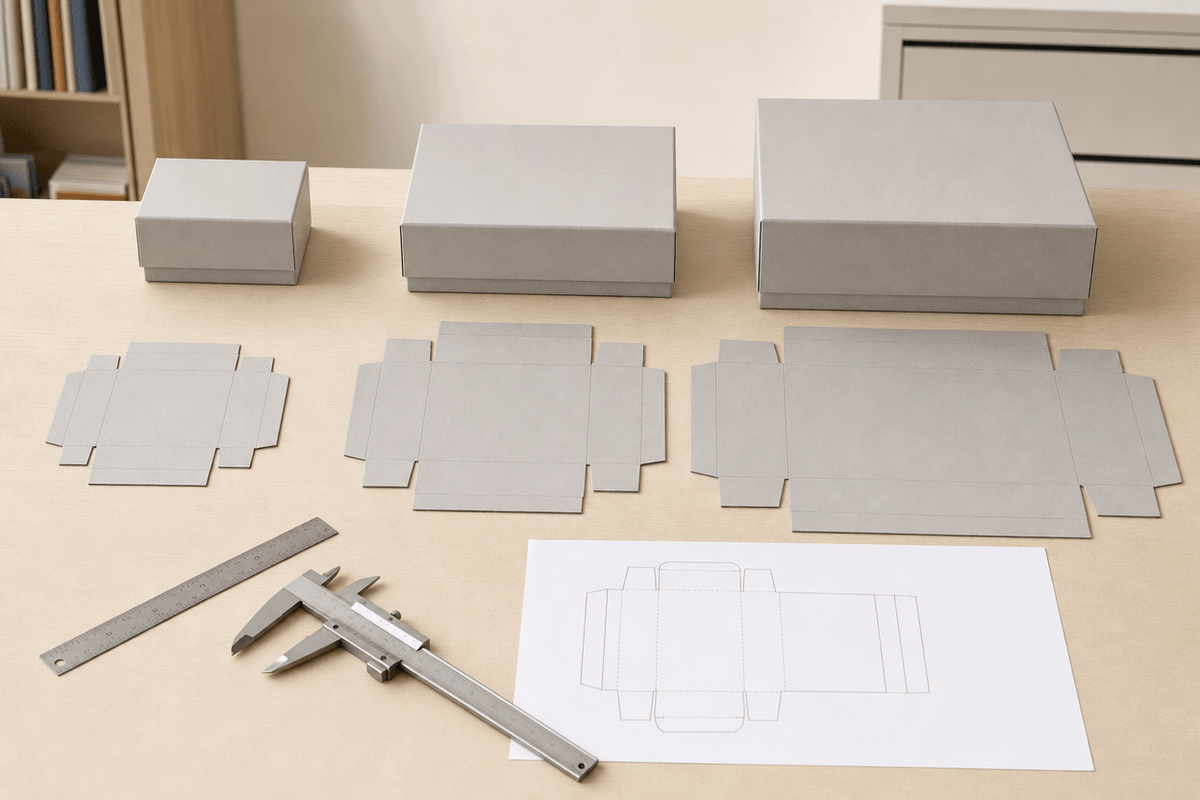
Box size is one of the first cost factors, but it should not be considered alone.
A larger box normally requires more greyboard, wrapping paper and production space. It may also increase:
- Material consumption
- Cutting and wrapping requirements
- Carton size
- Storage space
- Shipping volume
- Manual handling requirements
The internal dimensions are particularly important because they determine whether the product and insert fit correctly.
For an initial quotation, buyers can provide either:
- The required internal box dimensions; or
- The product dimensions, weight and intended layout
If the package contains several products or accessories, a layout photo or simple drawing can help the manufacturer estimate the final box size more accurately.
Reducing unnecessary empty space may lower material and shipping costs, but the box still needs enough room for the product, insert and practical assembly tolerances.
2. Box Structure and Assembly Requirements
Rigid boxes are available in different structures, and each structure has its own material and assembly requirements.
Common options include:
- Lid and base boxes
- Magnetic closure boxes
- Drawer boxes
- Hinged presentation boxes
- Collapsible rigid boxes
- Book-style boxes
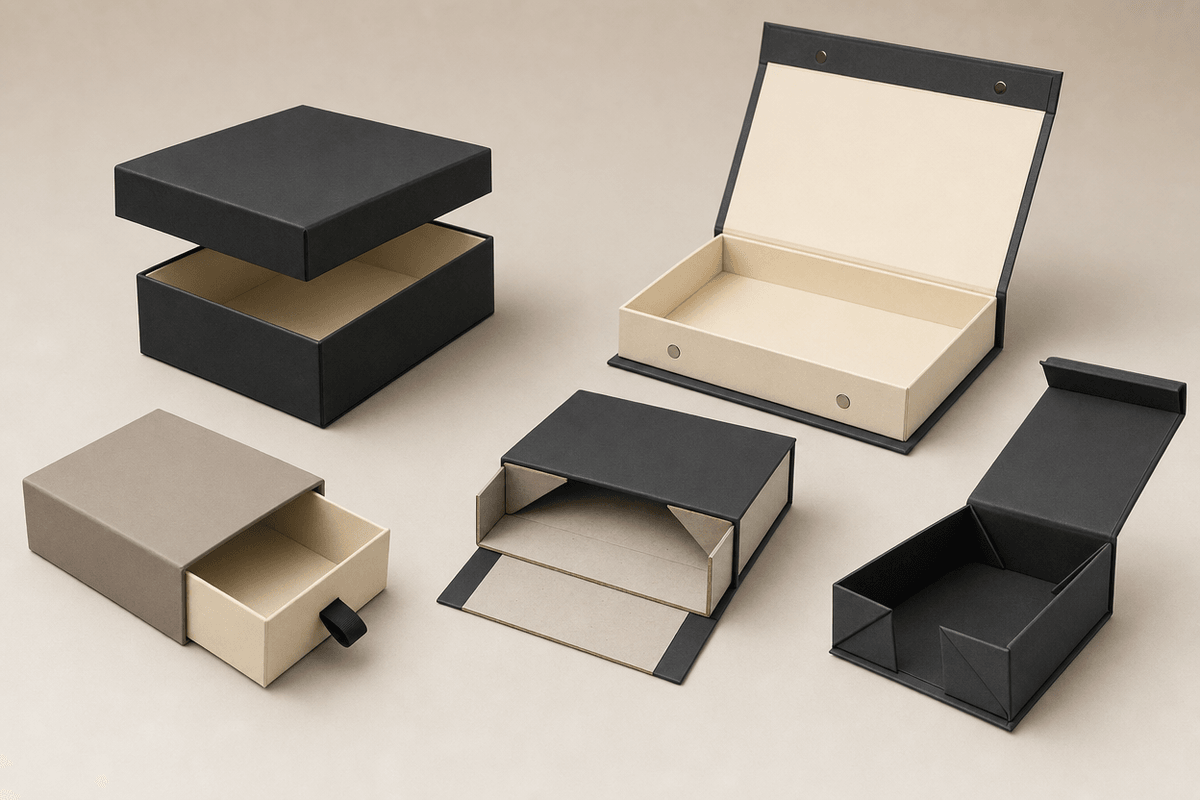
Buyers can explore different custom packaging solutions before deciding which structure best matches their product, presentation requirements and budget.
A basic lid and base box may require fewer components than a magnetic closure box with a hinged lid, concealed magnets and ribbon pull.
More complicated structures can involve additional processes such as:
- Magnet installation
- Hinge construction
- Ribbon attachment
- Multiple wrapped components
- Precise alignment
- Extra hand assembly
The most suitable structure depends on the product, presentation requirements, packing process and shipping method.
Buyers should therefore avoid selecting a structure based only on appearance. A simpler box may provide the required protection and presentation while reducing unnecessary production steps.
3. Greyboard, Wrapping Paper and Printing
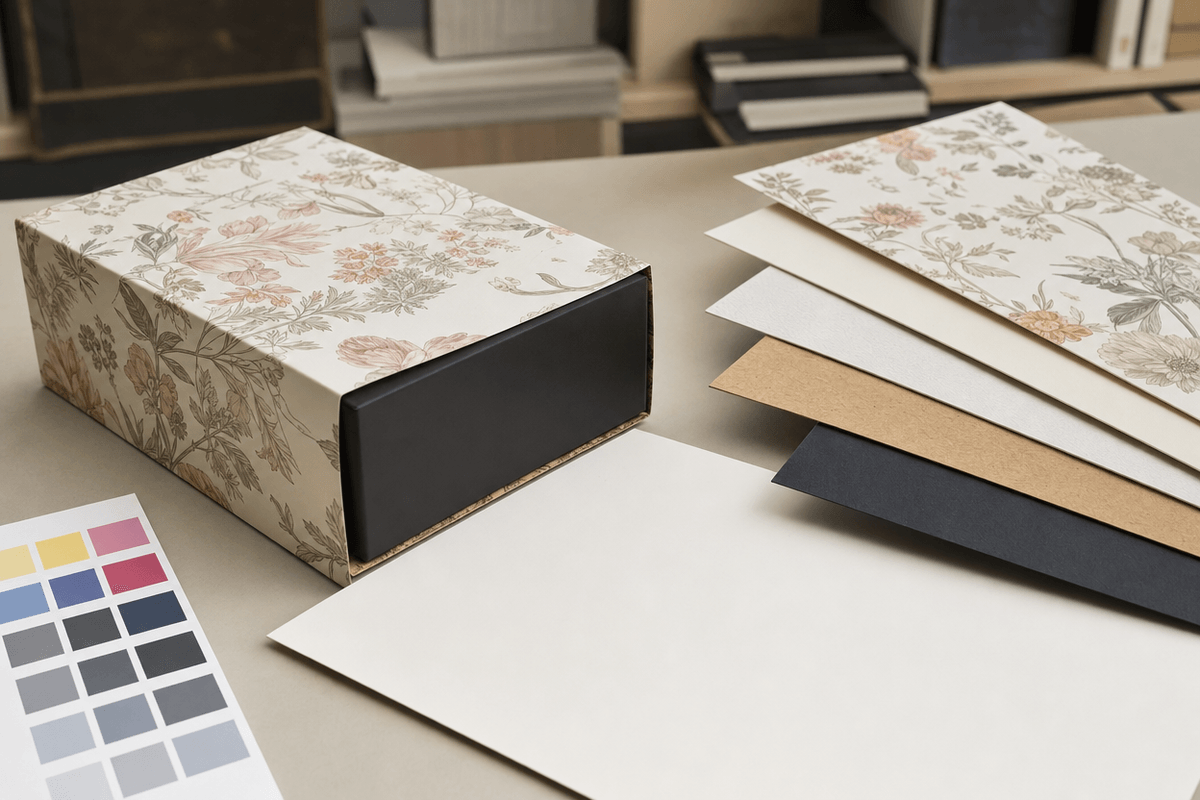
Most custom rigid boxes use greyboard as the structural base. The thickness of the board is selected according to box size, product weight and the level of rigidity required.
Using thicker board can increase strength, but it also affects material consumption, cutting, wrapping and shipping weight. The thickest option is not automatically the best option for every project.
The outer wrapping material also affects cost. Common choices include:
- Printed coated paper
- Uncoated specialty paper
- Textured paper
- Dyed paper
- Kraft paper
- Decorative paper with special surfaces
Custom printed paper usually requires artwork preparation, color control and printing setup. Specialty papers may cost more because of their texture, color, availability or minimum purchasing requirements.
When comparing quotations, buyers should confirm whether the price is based on:
- Standard printed paper
- Specialty paper
- Full-color printing
- Spot-color printing
- Inside and outside wrapping
- Printed or unprinted interior surfaces
These specifications should remain consistent across suppliers if the quotations are being compared directly.
4. Surface Finishes
Finishing processes can create a more distinctive appearance, but every added process affects tooling, setup, production time and quality control.
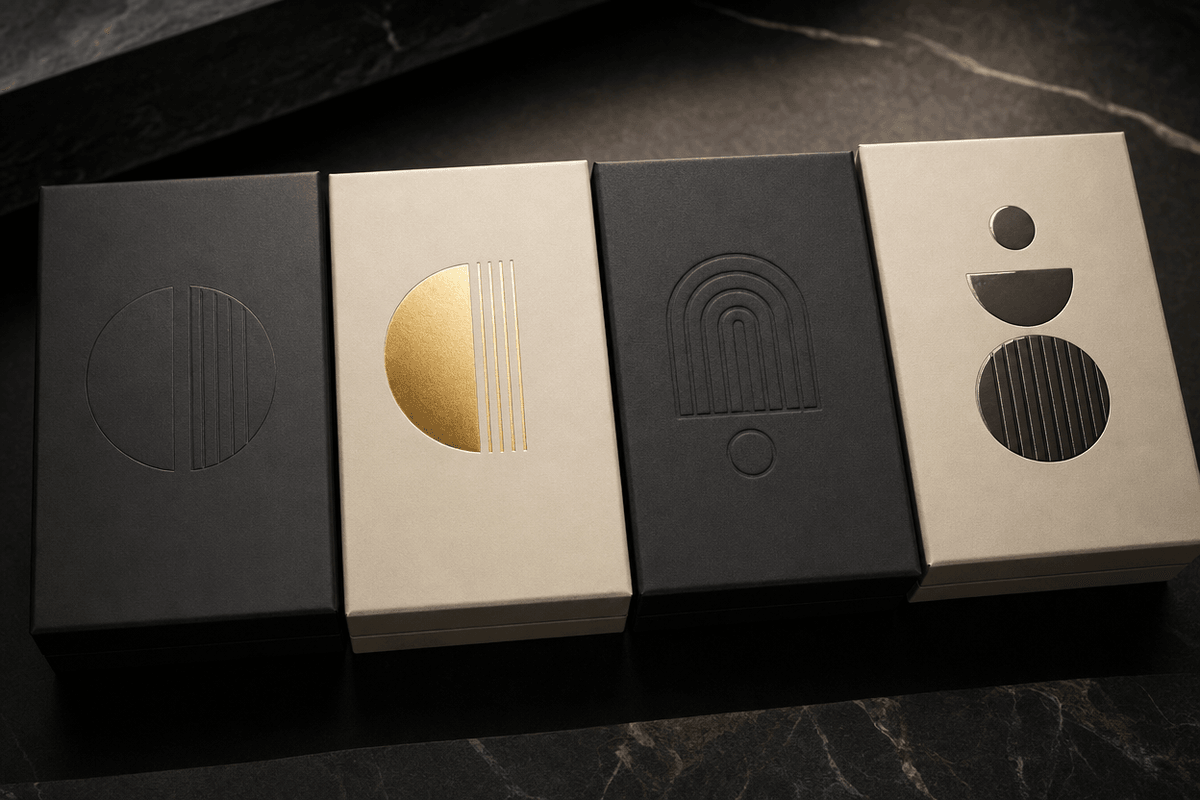
Common rigid box finishes include:
- Matte or gloss lamination
- Hot foil stamping
- Embossing
- Debossing
- Spot UV
- Screen printing
- Textured effects
- Metal labels or decorative accessories
A box with one foil-stamped logo is usually simpler to produce than a box combining lamination, foil stamping, embossing, spot UV and several printed colors.
Finishes may also require additional tooling. For example, foil stamping and embossing normally need custom dies based on the approved artwork.
Buyers can control costs by identifying which finish is essential to the brand presentation and which effects are optional.
Instead of adding several decorative processes automatically, consider focusing on one strong visual element, such as:
- A clearly positioned foil logo
- A distinctive textured paper
- A well-designed embossed pattern
- A contrasting interior color
A focused design can still look premium while keeping production requirements more manageable.
5. Insert Design and Material
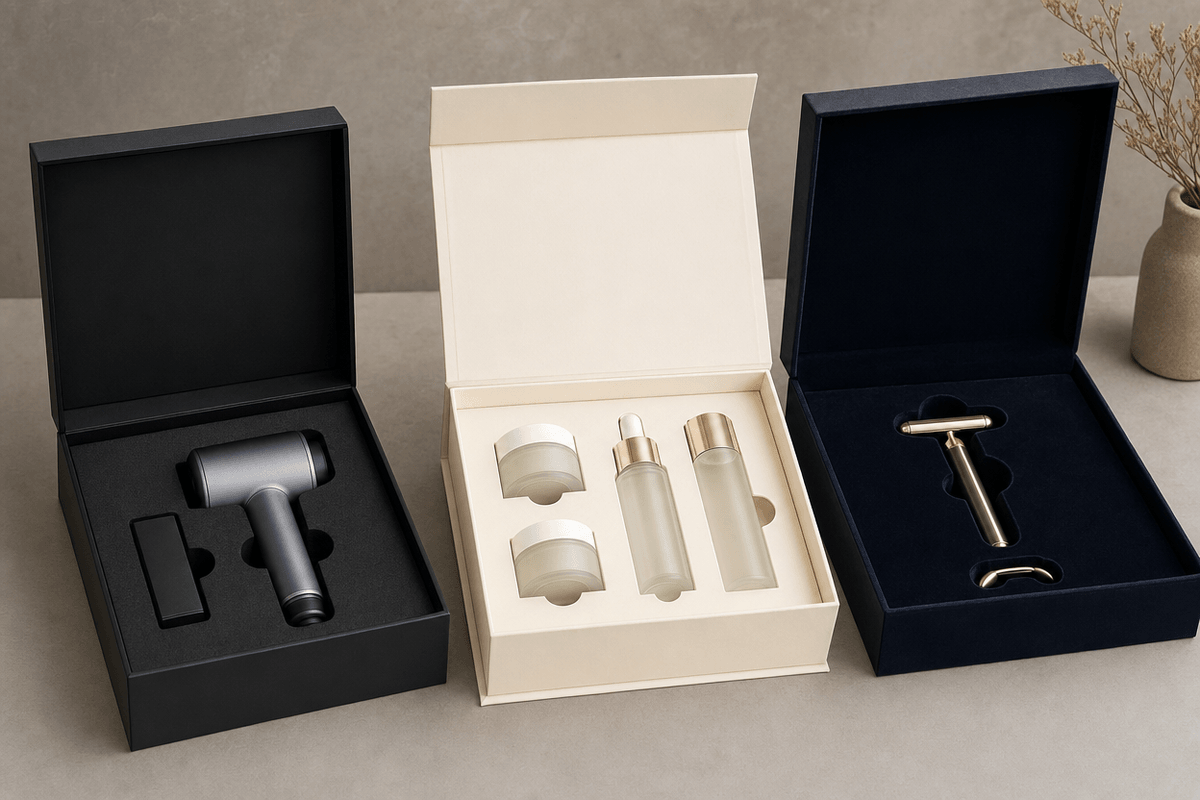
Custom packaging inserts are not only decorative components. They help position the product, improve presentation and reduce movement during handling or transportation.
Common insert materials include:
- EVA foam
- PE foam
- PU foam
- Paperboard
- Molded pulp
- Plastic trays
- Fabric-covered inserts
- Velvet-covered inserts
The cost depends on the material, thickness, number of cavities, cutting method and covering requirements.
A simple paperboard platform may cost less than a multi-layer EVA insert covered with velvet. However, the least expensive insert is not always suitable for a heavy, fragile or unusually shaped product.
Insert design may need to account for:
- Product dimensions
- Product weight
- Fragile areas
- Accessories
- Cables or instruction cards
- Finger notches
- Pull ribbons
- Display direction
- Packing and removal process
Providing product samples, accurate dimensions or clear product photographs can reduce uncertainty during insert development.
Need help comparing box and insert options? Send your product size, quantity, preferred structure and reference images to QX Packs on WhatsApp:
6. Order Quantity and Production Setup
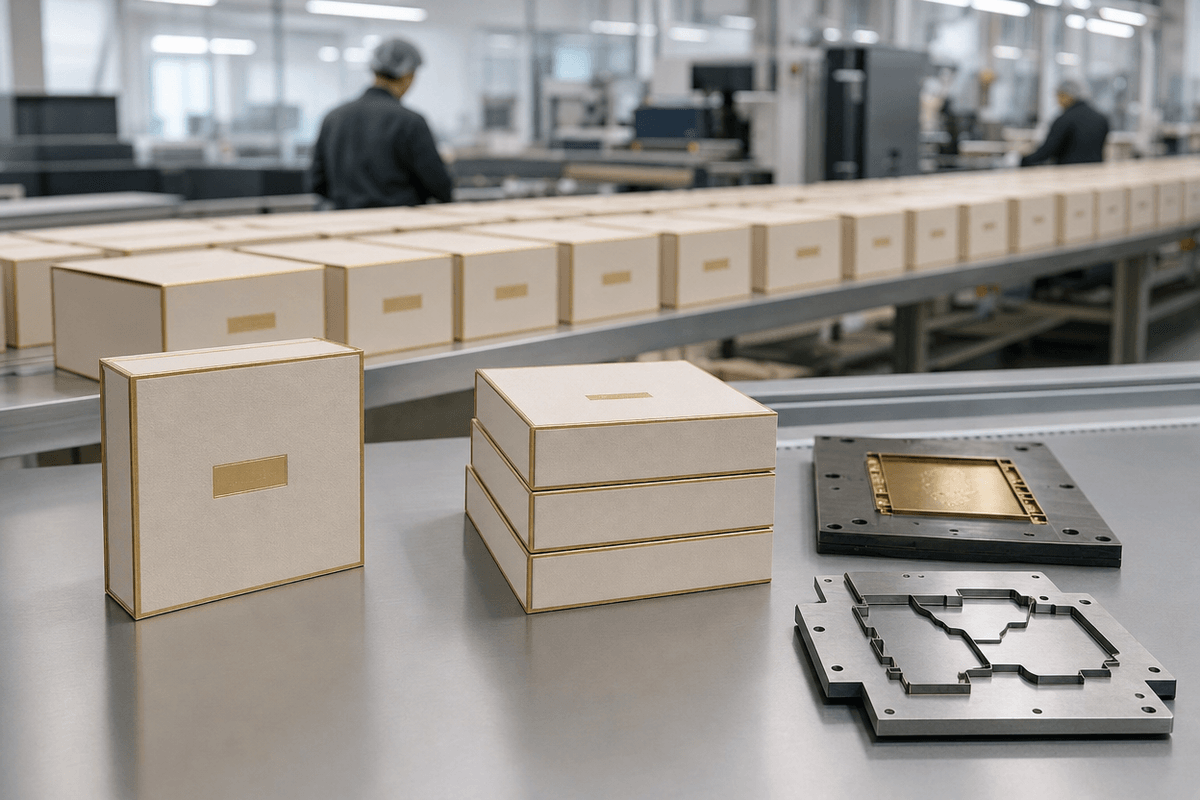
Order quantity has a significant effect on the unit cost of custom rigid boxes.
Custom production may involve fixed setup costs for:
- Structural design
- Sampling
- Printing plates
- Cutting dies
- Foil or embossing dies
- Machine setup
- Color adjustment
- Production preparation
These costs are distributed across the total order quantity. As a result, a small order normally has a higher unit cost than a larger order with the same specifications.
However, buyers should not select a larger quantity based only on a lower unit price. Storage capacity, sales forecasts, packaging updates and product changes should also be considered.
When requesting a quotation, provide a realistic quantity or ask for several quantity levels, such as:
- 1,000 pieces
- 3,000 pieces
- 5,000 pieces
This makes it easier to understand how quantity affects the unit cost and total purchasing budget.
7. Packing, Assembly and Delivery Requirements
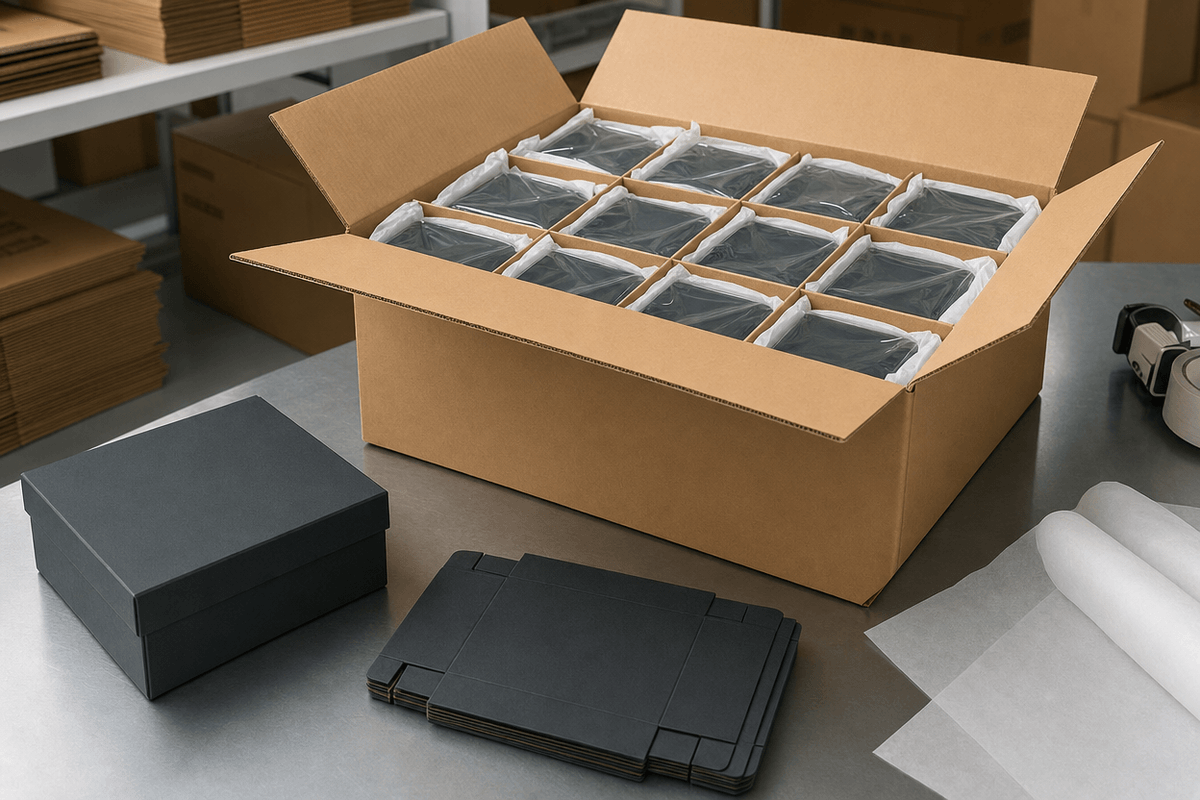
The quotation may also change according to how the finished boxes are assembled and packed.
For example, a fully assembled rigid box normally takes more carton space than a collapsible box. Additional protective materials may also be needed to prevent scratches, dents or surface damage.
Possible packing requirements include:
- Individual polybags
- Tissue paper protection
- Protective corner materials
- Inner cartons
- Export cartons
- Custom carton labels
- Barcode labels
- Special packing quantities
- Palletized shipment
If the box contains ribbons, magnets, accessories or several internal components, additional manual assembly may be required.
Buyers should also clarify whether the quotation includes:
- Fully assembled boxes
- Flat or collapsible boxes
- Insert installation
- Accessory placement
- Individual protective packing
- Export carton packing
- Delivery to a specific destination
Comparing an ex-factory price with a delivered price can create a misleading cost difference. Always confirm the same trade terms and packing scope before comparing quotations.
How Buyers Can Control Custom Rigid Box Cost
Cost control should begin before sampling, not after the design has already been finalized.
Here are several practical ways to manage the budget:
Keep the Box Size Efficient
Avoid unnecessary empty space while maintaining enough room for the product and insert.
Prioritize Essential Finishes
Choose the processes that contribute most to the desired appearance instead of combining multiple finishes without a clear purpose.
Confirm the Insert Early
Late changes to the product layout or insert can affect the box dimensions, structure and material requirements.
Use Comparable Specifications
Ask every supplier to quote the same size, structure, materials, finishes, insert and quantity.
Consider Packing and Shipping
A compact or collapsible structure may reduce storage and shipping volume for some projects.
Prepare Accurate Project Information
Clear information reduces assumptions and makes the initial quotation more useful.
Custom Rigid Box Quotation Checklist
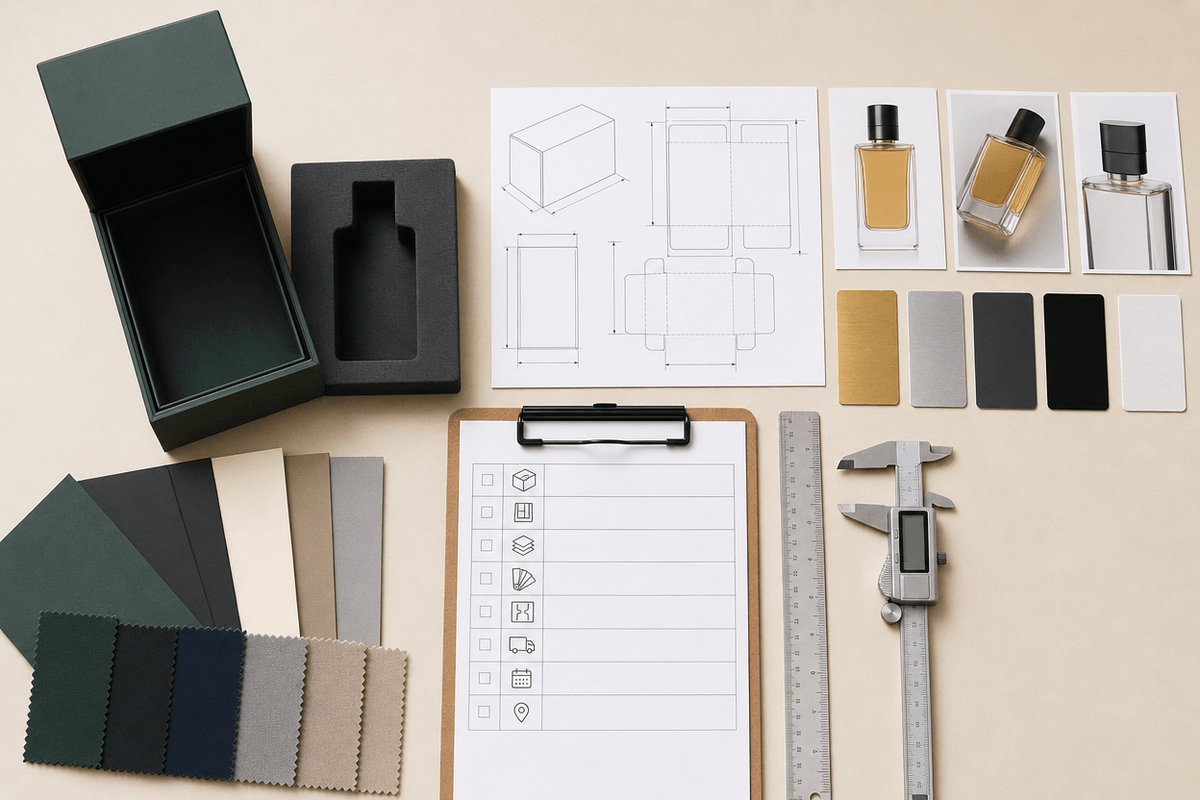
Before requesting a quotation, prepare the following details:
- Product dimensions: length × width × height
- Product weight
- Required internal or external box dimensions
- Preferred box structure
- Order quantity
- Greyboard or strength requirements
- Wrapping paper preference
- Printing colors
- Logo and artwork files
- Required finishes
- Insert material and layout
- Accessories or instruction cards
- Individual packing requirements
- Delivery country or destination
- Reference photographs
If some specifications have not been decided, explain the required function, target appearance and approximate budget level. The packaging manufacturer can then suggest practical options for comparison.
Why Comparable Specifications Matter
A lower quotation does not always represent the same product.
One supplier may quote thinner board, standard paper and a simple insert, while another quotation may include thicker board, specialty paper, additional finishes and individual protective packing.
Before selecting a supplier, check whether the quotations cover the same:
- Box dimensions
- Board thickness
- Structure
- Paper
- Printing
- Finishes
- Insert
- Quantity
- Assembly
- Packing
- Shipping terms
This comparison helps buyers understand where the price difference comes from and reduces unexpected changes after sampling.
Frequently Asked Questions
How much does a custom rigid box cost?
The cost depends on the box size, structure, materials, printing, finishes, insert, quantity, assembly and packing requirements. Accurate specifications are needed before a comparable price can be calculated.
Does a larger rigid box always cost more?
A larger box usually uses more board and wrapping paper, but size is only one factor. Structure, finishes, insert complexity and quantity may have an equal or greater effect on the final quotation.
Which rigid box structure is the most cost-effective?
There is no single structure that is best for every project. A standard lid and base box may require fewer components, while collapsible boxes may help reduce storage and shipping volume. The best option depends on the product and supply chain requirements.
Do custom inserts increase the box cost?
Yes. Insert material, thickness, cavity design, surface covering and assembly all affect the price. However, a suitable insert may be necessary to protect the product and maintain the intended presentation.
Why does the unit price decrease at higher quantities?
Custom packaging includes fixed setup costs such as tooling, printing preparation and machine setup. These costs are distributed across more boxes when the order quantity increases.
Can I get a quotation before completing the artwork?
Yes. An initial quotation can usually be prepared using the box dimensions, structure, quantity, material, finishes and insert requirements. Final artwork may still be required to confirm printing and finishing details.
Request a Comparable Custom Rigid Box Quote
Custom rigid box cost is determined by a combination of specifications—not by box size alone.
To receive a practical and comparable quotation, send QX Packs your:
- Box size or product size
- Product weight
- Required quantity
- Preferred materials
- Printing and finishing requirements
- Insert needs
- Reference photographs
- Delivery destination
For a quick discussion, contact QX Packs through WhatsApp.
For a detailed project request with specifications and files, use the Contact Us form.
QX Packs can review your requirements and help you compare suitable box structures, materials, inserts and finishing options for your project.