
When moving electronics packaging to a new supplier, an old box provides a useful reference. It may not show which artwork was approved, whether the insert fits the current product, or what changed during the previous production run.
These gaps can lead to a replacement box that looks familiar but performs differently when the product is packed.
A clear handover gives the new manufacturer an agreed starting point. For brands transferring folding boxes, rigid boxes and fitted inserts, the main tasks are to identify the reference packaging, confirm available files, review tooling and assign responsibility for the complete packaging set.
1. Identify the Packaging You Want to Continue
Start by identifying the version the new supplier should work from.
You may have an early sample, a production sample and boxes from the latest delivery. Check whether they match before describing any of them as the approved reference.
Record:
- Which sample or production batch represents the required result.
- Which features should remain unchanged.
- Which problems need correcting.
- Whether the product or accessories have changed.
For example, a charger may now have a longer plug section, or a cable may be packed in a different folded shape. The previous insert could then need adjustment even if the outer box appearance stays the same.
Use photographs to explain the current packaging first. Where physical references are needed, agree on the relevant product and complete packaging samples with the new supplier before arranging shipment.
The objective is to transfer a complete box-and-insert project with a clear reference.
2. Check Which Files Are Available and Approved
Packaging files are often held by different people. A brand designer may have the printed artwork, while the previous supplier holds the structural drawing or insert tooling information.
Check what you can provide and which files you are authorised to share.
| Handover Item | What to Confirm |
|---|---|
| Printed artwork | The approved version, linked images, fonts and separate finishing layers. |
| Box dieline | Whether it matches the approved packaging size and construction. |
| Insert drawing | Whether the layout matches the current product and outer box. |
| Material specification | Recorded board, paper, insert material and surface treatment details. |
| Physical reference | Whether it is an approved sample or a box from a particular delivery. |
| Change record | Adjustments agreed after the original artwork or sample was prepared. |
Keep the artwork and dieline versions connected. A current logo placed on an old structural drawing can still produce the wrong result.
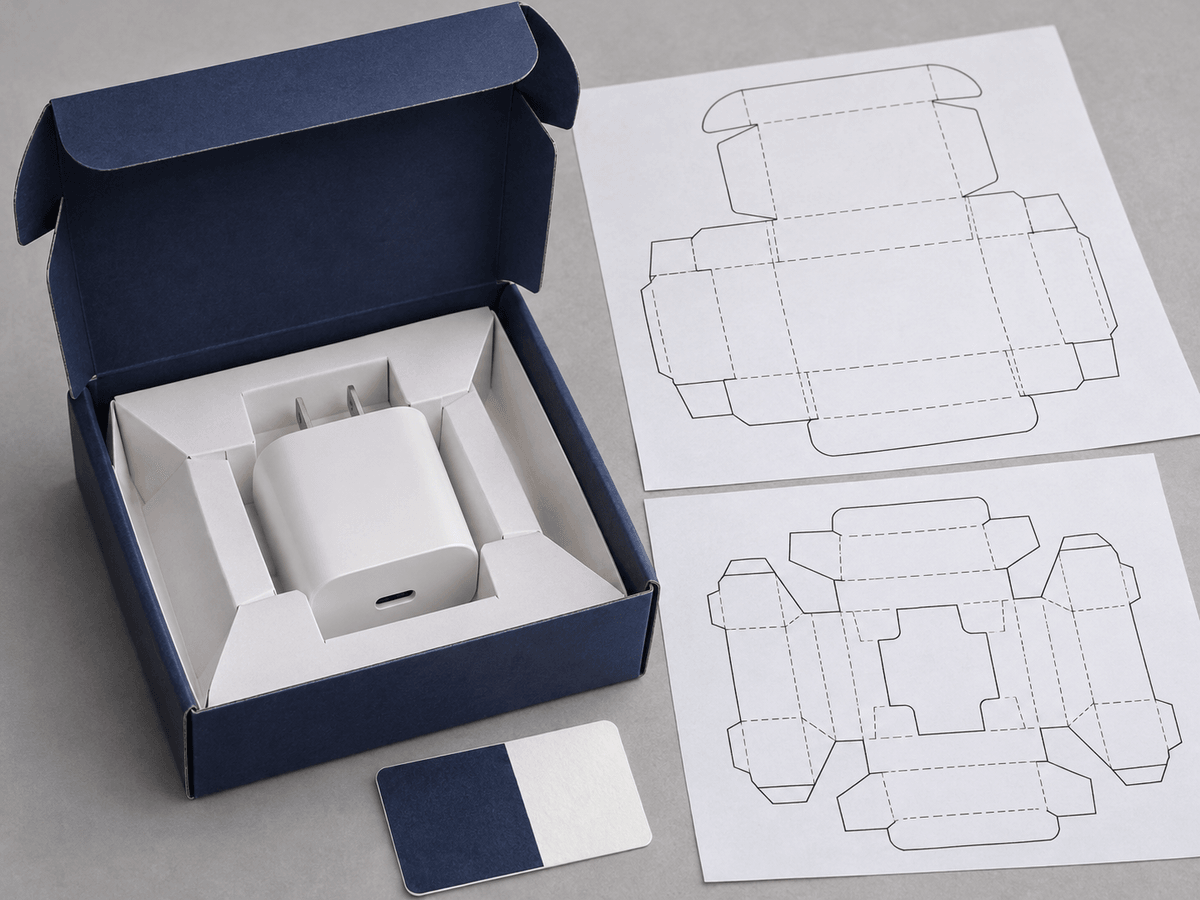
If editable files are missing, state that at the beginning. The new supplier can then identify what needs measuring, redrawing or developing before sampling.
Avoid treating a photograph or PDF preview as a complete production specification. It may communicate appearance without confirming construction, dimensions or finishing details.
For a wider list of product information to prepare, see our electronics accessory packaging brief.
3. Review Tooling Before Assuming It Can Be Reused
Existing tooling does not automatically transfer with the packaging order.
First, establish whether the tooling is available for transfer and whether you have permission to use it. Then ask the new manufacturer to review its condition and compatibility with the proposed production process.
A cutting die may have been made for a different machine setup. An insert mould may need information about its material, forming process or matching equipment before reuse can be assessed.
Keep these questions separate:
- Is the tooling available?
- Is its use or transfer authorised?
- Can the new supplier use it for the confirmed specification?
If the tooling cannot be transferred or reused, request a clear explanation of what must be developed again. New tooling costs and sample requirements should be identified before the production quotation is approved.
For custom folding boxes, the new manufacturer may also need to review the dieline, paperboard and creasing arrangement together. Reusing an existing drawing does not remove the need for that review.
4. Assign Responsibility for the Complete Packaging Set
Electronics packaging may involve an outer box, a fitted tray, a paper card, a sleeve and printed instructions. Confirm which components belong to the new packaging order and who supplies each one.
For box-and-insert projects, review both components together. A change in board thickness, wrapping or usable internal space can affect how the insert sits and whether the box closes correctly.
The handover should also identify:
- Who supplies the product information and artwork.
- Who develops the outer box and insert.
- Who confirms the packaging sample.
- Who loads the electronic product into the packaging.
- Where the packaging will be delivered.
If a separate product assembly factory handles packing, obtain its requirements before finalising the structure. Its team may need a particular box delivery state, insert preparation method or component identification system.
QX Packs manufactures custom packaging. Product supply and product-loading responsibilities should be confirmed separately as part of the project arrangement.
5. Approve the New Sample Against a Written Comparison
Before sampling, turn the reference packaging into a short comparison record.
A useful format is:
| Feature | Previous Reference | Requirement for the New Sample |
|---|---|---|
| Outer box construction | Reference sample or recorded drawing. | Keep or revise, with the change described. |
| Product position | Current packed arrangement. | Confirm against the actual product. |
| Insert support | Existing contact and support areas. | Keep or adjust specific areas. |
| Printed appearance | Approved artwork and physical reference. | Confirm colour and finishing references. |
| Opening and removal | Existing user experience. | Identify any required improvement. |
| Delivery state | Previous packing arrangement. | Confirm how the new packaging will be supplied. |
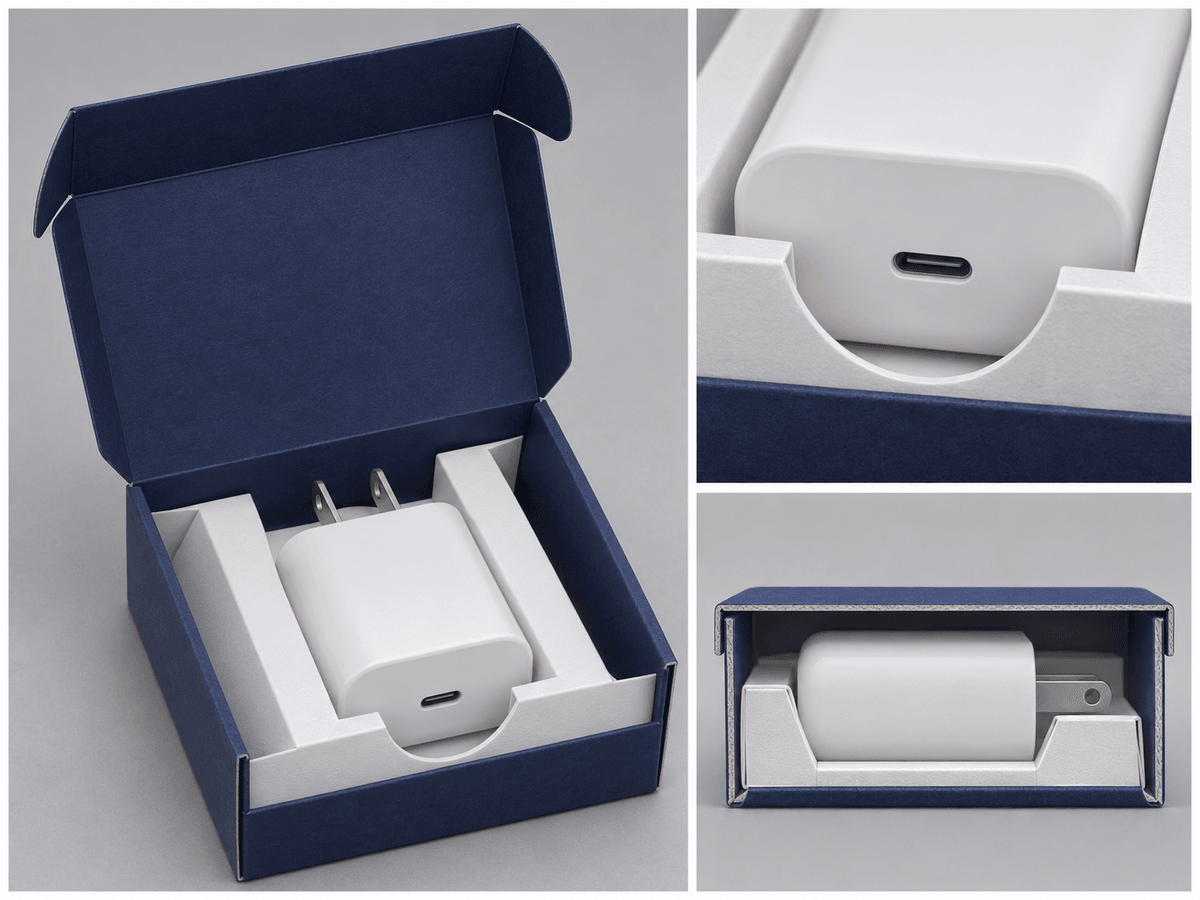
Mark uncertain items as needing review. Do not label them “unchanged” simply because no specification has been found.
Review the new sample with the actual product and accessories. Check that the product can be loaded, held, removed and repacked as intended.
If an adjustment is requested, identify the location and the expected result. A marked photograph or short video is usually more useful than a general instruction such as “make the insert better.”
6. Confirm the First Production Order
After sample approval, make sure the production order refers to the agreed files, materials, structure and packing arrangement.
Record any accepted difference from the previous supplier’s packaging. A new paper surface, revised insert or different delivery state should be visible in the order confirmation.
For an electronics range with several designs, identify the quantity and specification for each printed version. Approval of one box does not automatically approve every insert or artwork variation.
A clear first order gives both teams a reference for later production. It also helps separate a supplier-transfer issue from a subsequent product or design change.
Discuss Your Electronics Packaging Handover
QX Packs is a custom packaging manufacturer in Shenzhen, China, since 2004. We support electronics packaging projects with custom outer boxes and fitted inserts developed as a coordinated packaging set.
Planning to move an existing packaging project to a new manufacturer?
Send photographs of the current packaging, product dimensions, quantity per design, available files and delivery country. Tell us which features need to stay the same and which changes you want reviewed.
For many custom printed paper packaging projects, 1,000 pieces per design is a practical starting point. Orders of around 500 pieces per design require a specification review. Final MOQ is confirmed in the quotation.