
From 100 to 1,000 Pieces: How Order Quantity Changes Custom Rigid Box Cost and Production
A practical guide for brands comparing rigid box MOQ, unit cost, production setup, inserts and alternative packaging structures
When brands request a quotation for custom packaging, quantity is often treated as one line in the inquiry. In reality, it affects almost every part of a rigid box project—from material purchasing and production setup to unit cost, insert development and shipping efficiency.
A request for 100 custom rigid boxes is not simply a smaller version of a 1,000-piece order. The structure may look the same, but the production economics are very different.
For most fully customized rigid box projects, QX Packs normally works around a practical production quantity of 1,000 pieces or more per design. Quantities around 500 pieces may be evaluated case by case when the size, structure, material and finishing are production-friendly. Orders of approximately 100 pieces are generally not our main production direction.
This guide explains what changes between 100, 500 and 1,000 pieces, why unit cost falls as quantity increases, and when another packaging structure may be more suitable.
Quick Comparison: 100, 500 and 1,000 Custom Rigid Boxes
| Order Quantity | Production Suitability | Unit-Cost Expectation | Design Flexibility | Recommended For |
|---|---|---|---|---|
| Around 100 pieces | Usually inefficient for fully customized rigid box production | Very high | May require significant simplification | Prototypes, presentation samples or highly specialized projects |
| Around 500 pieces | May be reviewed case by case | Higher than standard production quantities | Best with standard materials and limited finishing | Established brands testing a confirmed design |
| 1,000 pieces or more | More suitable for normal custom production | More efficient | Better support for custom structure, printing, finishing and inserts | Brand launches, retail programs and repeatable commercial orders |
Why Do 100 Custom Rigid Boxes Cost More Per Piece?
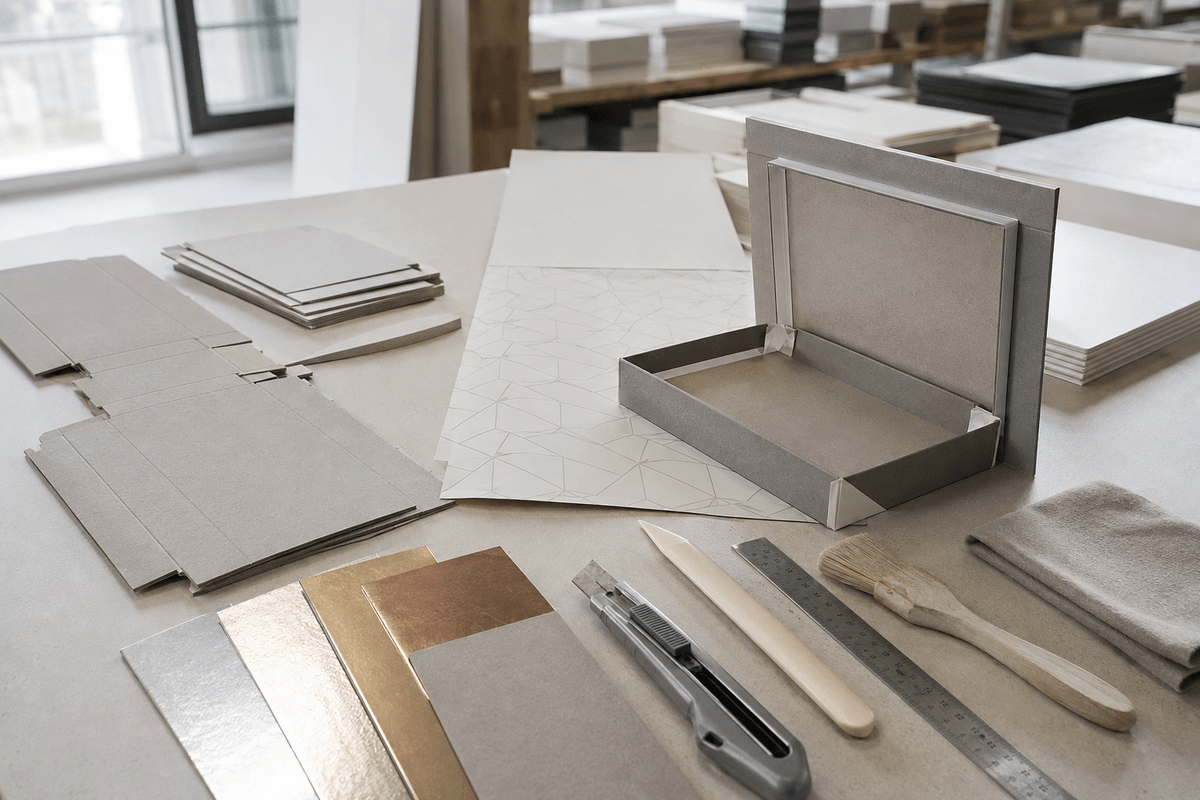
A custom rigid box is normally made from rigid greyboard wrapped with printed or specialty paper. Depending on the design, production may include cutting, wrapping, positioning, hand assembly, foil stamping, insert fitting and quality inspection.
Many of these operations require preparation before the first finished box is produced.
For example, a project may require:
- structural development
- material sourcing
- printing setup
- cutting or die preparation
- foil or embossing tooling
- color adjustment
- production-line arrangement
- insert development
- packing and quality-control preparation
These activities still exist whether the final order contains 100 pieces or 1,000 pieces. With only 100 boxes, the setup and development costs are divided across very few units. This results in a much higher unit price.
Increasing the quantity does not make all costs disappear. It allows the fixed preparation costs and normal production waste to be distributed more efficiently.
What Changes at Around 500 Pieces?
An order of approximately 500 pieces may sometimes be possible, but feasibility depends on the complete specification.
A 500-piece project is easier to evaluate when it has:
- one box size
- one artwork design
- a production-friendly rigid box structure
- standard wrapping paper
- simple printing
- limited decorative finishing
- a straightforward insert
- a realistic budget for the quantity
A complicated magnetic box with several Pantone colors, specialty paper, foil stamping, embossing and a custom-shaped EVA insert will have different production requirements from a simple lid and base box with standard paper.
If several designs use the same size, material and production setup, combined production may occasionally improve quantity flexibility. However, different artwork versions cannot always be treated as one single order. Each version still needs to be reviewed against the printing layout and manufacturing process.
For that reason, buyers should provide both the total quantity and the quantity required per design.
Why Is 1,000 Pieces Often a More Practical Starting Point?
At approximately 1,000 pieces or more, material purchasing, printing, mounting and assembly can normally be arranged more efficiently. This often creates a better balance between customization, unit cost and production feasibility.
A practical production quantity may also provide more room to consider:
- branded exterior and interior printing
- foil stamping or embossing
- textured wrapping paper
- magnetic closures
- ribbons or pull tabs
- custom paperboard, foam or EVA inserts
- coordinated packaging for multiple products
- retail or promotional launch schedules
This does not mean that every 1,000-piece design will have the same price or MOQ. A large presentation box with several components may still cost considerably more than a compact jewelry box.
Quantity must always be evaluated together with dimensions, materials, structure and finishing.
Which Costs Are Spread Across the Production Quantity?
Understanding cost structure helps buyers compare quotations more accurately.
Structural Development
Before production, the box dimensions and construction must be confirmed according to the product, opening style and insert arrangement. An unusual structure may require additional development and testing.
Printing and Color Setup
Custom artwork requires print preparation and color control. Pantone colors, full interior printing and strict brand-color requirements may require additional adjustment.
Cutting and Finishing Preparation
Die cutting, foil stamping, embossing, debossing and other finishing processes may require dedicated setup or tooling.
Material Purchasing
Greyboard, wrapping paper, magnets, ribbons, foam and other components may have their own purchasing requirements. Specialty materials can be less flexible than standard options.
Hand Assembly
Unlike many folding cartons, rigid boxes are generally delivered assembled. Wrapping, forming, positioning and insert installation may involve substantial manual work.
Quality Control and Packing
The factory must establish inspection standards and packing arrangements for each project, even when the order quantity is small.
These factors explain why reducing an order from 1,000 pieces to 100 pieces does not normally reduce the total cost in the same proportion.
When Should You Consider Folding Cartons Instead?
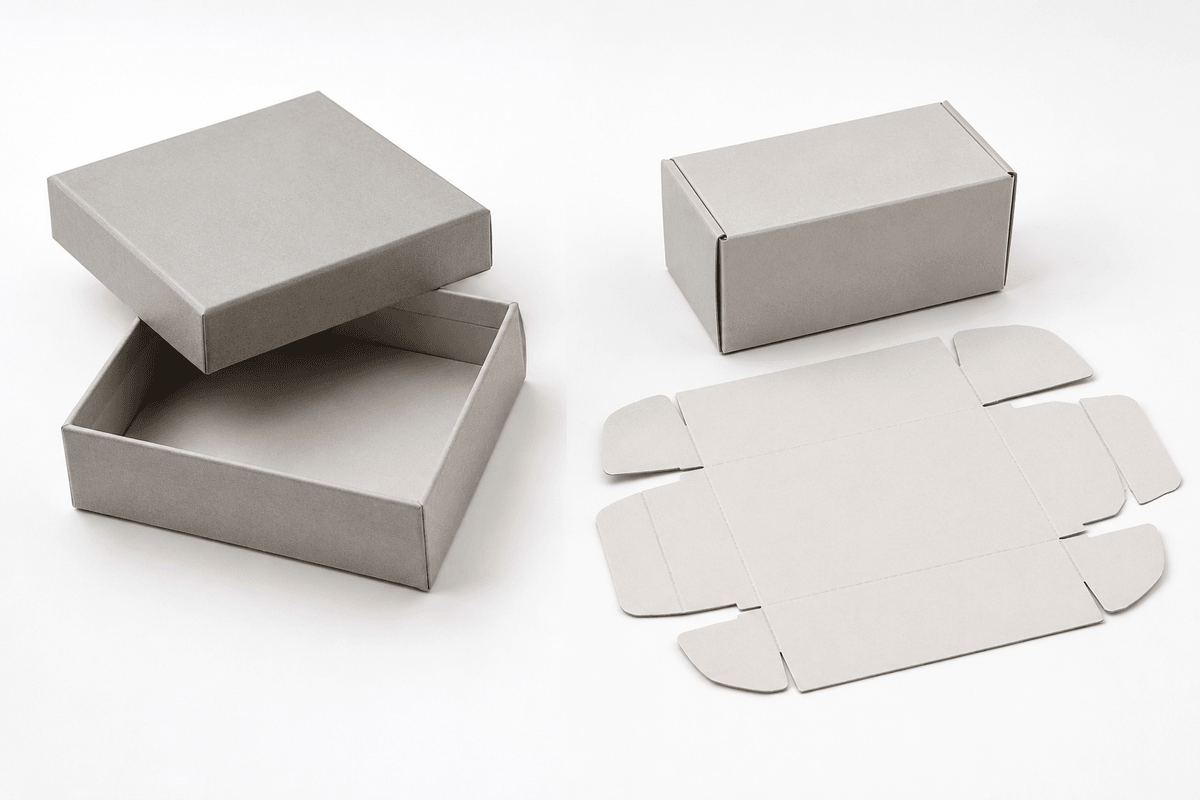
If the required quantity is limited or the budget cannot support a custom rigid box, a custom folding box may be a more appropriate structure.
Folding cartons use paperboard rather than thick wrapped greyboard. They can be shipped flat and are generally more efficient for printing, cutting, storage and transportation.
They may be better suited when:
- the product is lightweight
- shipping efficiency is important
- the packaging must be delivered flat
- the design does not require a highly rigid presentation
- the budget is more important than a premium unboxing structure
- the order contains several product variations
However, changing to a folding carton does not automatically guarantee that an extremely low quantity will be economical. Custom size, printing, finishing and inserts still require production setup.
The correct decision is not simply “rigid box or folding carton.” It is to choose the structure that matches the product, quantity, presentation level and distribution plan.
The Insert Can Change the Production Decision
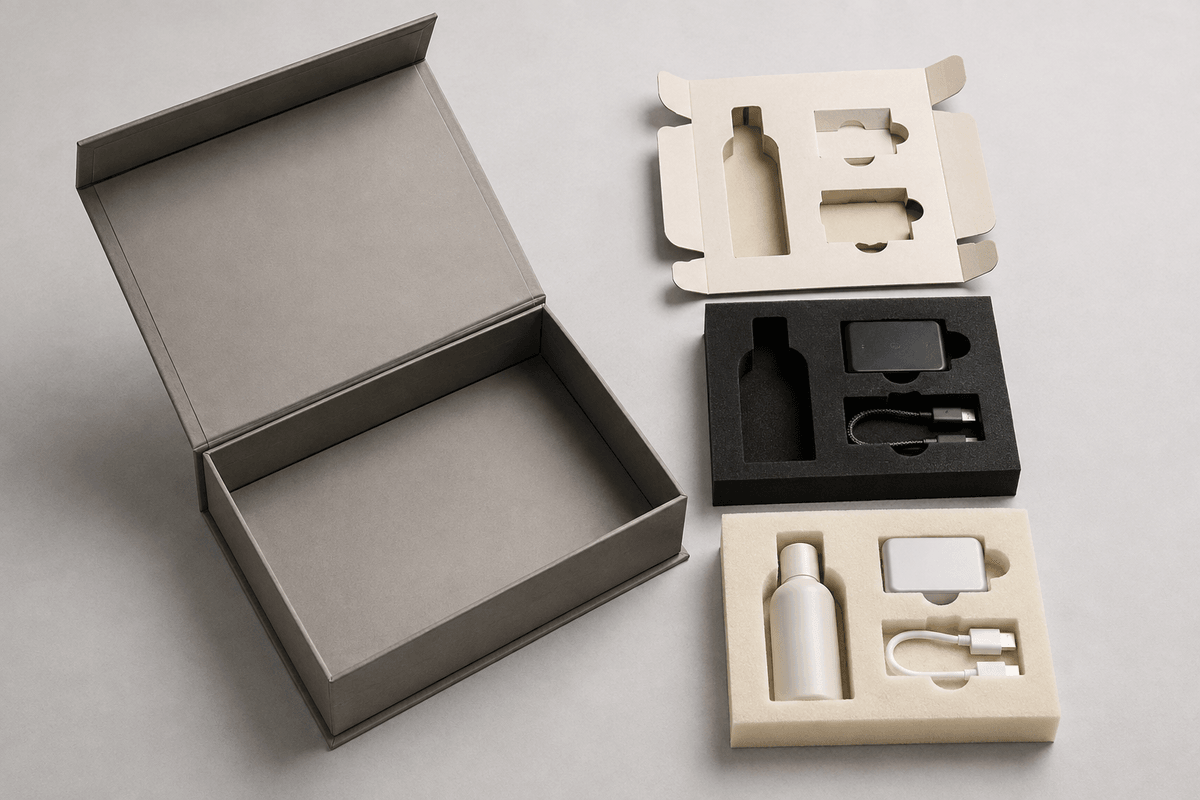
The outer box quantity is only one part of the project. A custom insert can affect tooling, materials, development cost and production feasibility.
Common custom insert options include:
- printed paperboard inserts
- folded paper platforms
- EVA foam inserts
- sponge or PU foam
- velvet-covered inserts
- pulp inserts
- thermoformed trays
A simple paperboard insert is usually easier to produce than a deep thermoformed tray or a precisely cut, multi-layer EVA insert. If the product set includes several components, the insert layout should be confirmed before the final box size is fixed.
To recommend a suitable insert, the supplier needs the dimensions, weight and arrangement of every product going inside the box. Photos, drawings or physical samples can also help prevent incorrect assumptions.
Two Typical Inquiry Scenarios
The following examples are based on common inquiry patterns. Project details have been generalized to protect buyer confidentiality.
Scenario 1: 100 Premium Boxes Without Confirmed Specifications
A buyer requests 100 luxury rigid boxes but provides no product dimensions, box reference, insert information, artwork or shipping destination.
At this stage, the supplier cannot calculate a meaningful quotation. The requested quantity is also too low to distribute the development and setup costs efficiently.
A more practical next step may be to clarify whether the buyer needs:
- a small number of samples before a future production order
- a simpler folding-carton structure
- an existing stock box
- or a fully customized commercial order at a more workable quantity
Quoting immediately without resolving these questions may create an unrealistic price expectation.
Scenario 2: 1,000 Boxes With a Complete Product Brief
Another buyer requests 1,000 rigid boxes for a confirmed product launch and supplies:
- finished product dimensions
- quantity per artwork design
- preferred box structure
- reference photos
- insert requirements
- logo artwork
- target launch date
- delivery country and postcode
This inquiry can be evaluated much more efficiently. The manufacturer can review the structure, calculate material usage, assess the insert and recommend suitable production details.
The difference is not only the higher quantity. It is also the completeness of the project.
What Should You Send Before Requesting a Quote?
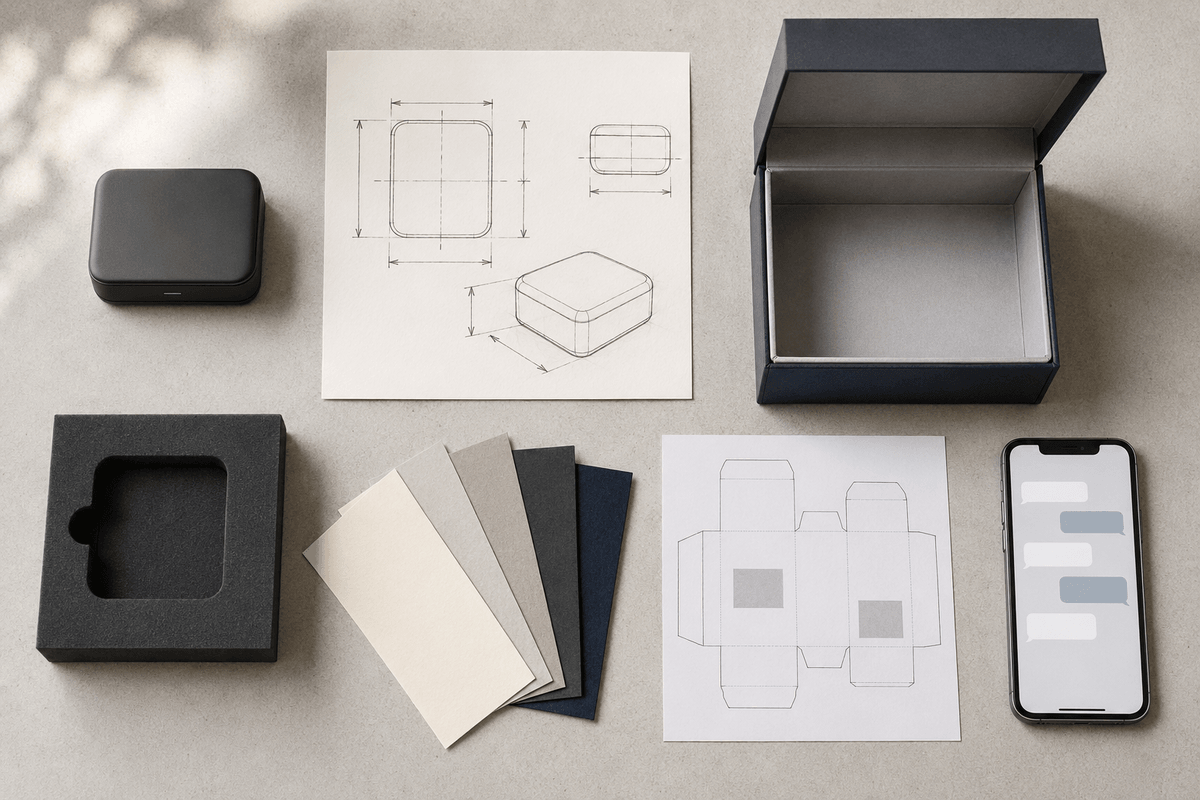
For a more accurate recommendation and quotation, prepare the following information:
- Product type
Explain what the packaging will hold and how it will be sold. - Product dimensions
Provide length, width and height for every item inside the box. - Quantity per design
State the quantity for each artwork, size, or box design. If you have multiple designs, list the quantity for each version separately. - Preferred box structure
Share a reference image or link if you are unsure of the technical box name. - Insert requirements
Explain how each product should be positioned and protected. - Printing and finishing
Include logo printing, Pantone colors, foil stamping, embossing, lamination or specialty-paper requirements. - Artwork status
Confirm whether editable artwork is ready or still under development. - Delivery destination
Provide the country, city and postcode so the shipping requirement can be considered. - Target schedule
Include the desired launch date or required delivery date.
You can also review QX Packs’ wider custom packaging solutions before deciding which structure best matches your product.
Frequently Asked Questions
What is the typical MOQ for custom rigid boxes?
For many fully customized rigid box projects, a practical production quantity commonly starts around 1,000 pieces per design. The final MOQ depends on box size, structure, paper, printing, finishing and insert requirements.
Can QX Packs produce 500 custom rigid boxes?
Quantities around 500 pieces may be evaluated case by case. Production-friendly structures, standard materials, one artwork version and simple finishing generally make the project easier to assess. Approval is not automatic and depends on the complete specification.
Can I order only 100 custom rigid boxes?
Approximately 100 pieces is generally not QX Packs’ main production direction for fully customized rigid boxes. The unit cost is usually high because structural development, printing setup, material preparation and hand assembly are spread across very few boxes.
Does ordering 1,000 pieces guarantee the lowest price?
Not necessarily. The unit cost is normally more efficient than at 100 or 500 pieces, but final pricing still depends on dimensions, materials, structure, printing, finishing, inserts and packing requirements. Higher quantities may reduce the unit cost further, subject to the specification.
Should I choose a folding carton for a smaller order?
A folding carton may be more economical when the product is lightweight, flat shipping is important or the budget does not support a premium rigid structure. It still requires a workable production quantity because custom printing and die cutting involve setup.
What information is required for a rigid box quotation?
Send the product dimensions, quantity per design, preferred structure or reference photo, insert requirements, printing and finishing details, artwork status, delivery destination and target schedule.
Plan the Quantity Before Finalizing the Box
The right order quantity is not simply the lowest number a factory will accept.
A 100-piece order may reduce inventory, but its unit cost can be disproportionately high. A 500-piece order may be feasible when the specification is simple and production-friendly. An order of 1,000 pieces or more usually provides a more practical foundation for fully customized rigid box production.
Before finalizing the structure, compare:
- unit cost
- total project budget
- product sales forecast
- artwork stability
- storage capacity
- shipping method
- reorder timing
- expected presentation level
A clear product brief allows the packaging manufacturer to recommend a realistic structure and quantity instead of providing a quotation based on assumptions.
Planning 1,000 or more custom rigid boxes? Send your product dimensions, quantity per design, number of designs or sizes, box reference, insert requirements and delivery destination to QX Packs for an initial project review.