Custom packaging cost is one of the first questions brands ask when planning a packaging project.
However, there is no single fixed price for custom boxes. Packaging cost depends on multiple factors, including box size, material, printing method, structure, quantity, and finishing details.
Understanding these factors helps brands make better decisions, avoid unnecessary costs, and choose the right packaging solution based on real needs.
1. Box Size and Dimensions
Box size is one of the most direct factors affecting cost.
Larger boxes require more material, more printing area, and more shipping space. Even small changes in dimensions can affect unit price, especially in large production runs.
Practical tip:
Keep packaging size as close as possible to product dimensions to reduce material waste and shipping volume.
2. Material Selection
Different materials have different cost levels and performance.
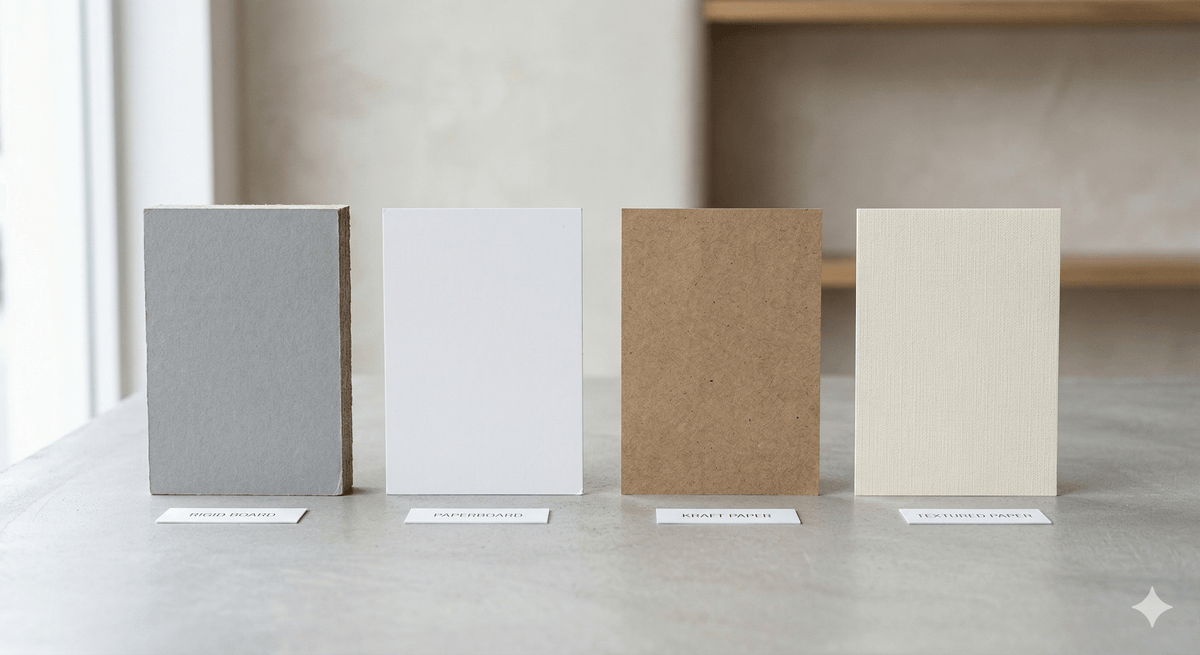
Rigid board is commonly used for premium packaging such as custom rigid boxes, while paperboard is widely used for custom folding boxes due to its lower cost and flat shipping advantage.
Common packaging materials include:
- Rigid board (for premium rigid boxes)
- Paperboard (for folding cartons)
- Kraft paper (eco-friendly options)
- Corrugated board (for shipping protection)
Cost impact:
Rigid board and specialty papers are more expensive than standard paperboard, but they provide stronger structure and a more premium appearance.
3. Printing and Finishing
Printing and finishing can significantly affect packaging cost.
Basic printing includes standard CMYK printing. More advanced options include:
- Pantone color matching
- Foil stamping
- Embossing / debossing
- Spot UV
- Soft-touch lamination
Cost impact:
Each additional finishing process increases production steps and cost.
Practical tip:
Use finishing selectively. Focus on key branding areas instead of applying multiple effects across the entire box.
4. Box Structure and Complexity
Box structure plays a major role in both material usage and production complexity.
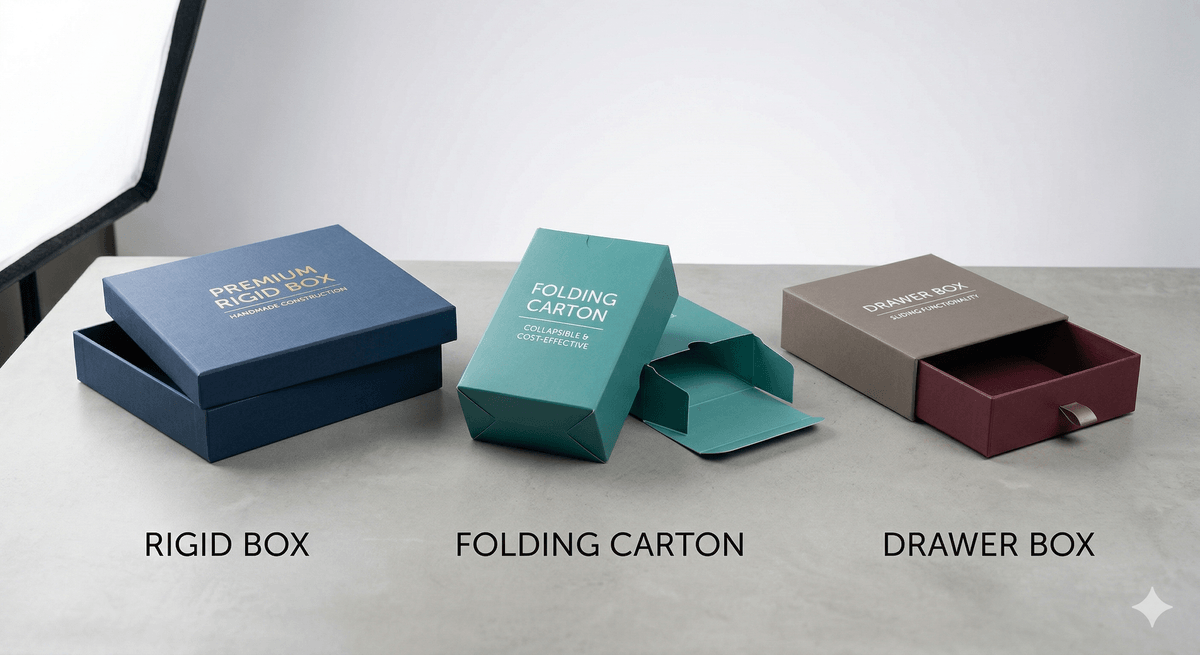
Simple structures (like folding cartons) are more cost-efficient. More complex structures (like rigid boxes, drawer boxes, or magnetic boxes) require more material and manual work.
Cost comparison:
- Folding cartons → lower cost, efficient for volume
- Rigid boxes → higher cost, premium presentation
- Drawer boxes → higher cost, more complex assembly
👉 Related reading:
5. Quantity and MOQ
Quantity has a direct impact on unit price.
Higher quantities reduce the cost per unit because:
- printing setup is spread across more units
- material procurement is more efficient
- production runs are more stable
General rule:
Higher quantity → lower unit price
Practical tip:
If possible, slightly increase your order quantity to reduce average cost.
6. Inserts and Internal Packaging
Custom inserts improve protection and presentation but also add cost.
Common insert types include:
- EVA foam
- Paperboard inserts
- Molded pulp
- Velvet or flocked inserts
Cost impact:
Material type and complexity of insert design both affect cost.
7. Shipping and Packaging Method
Shipping cost is often overlooked but can be significant.
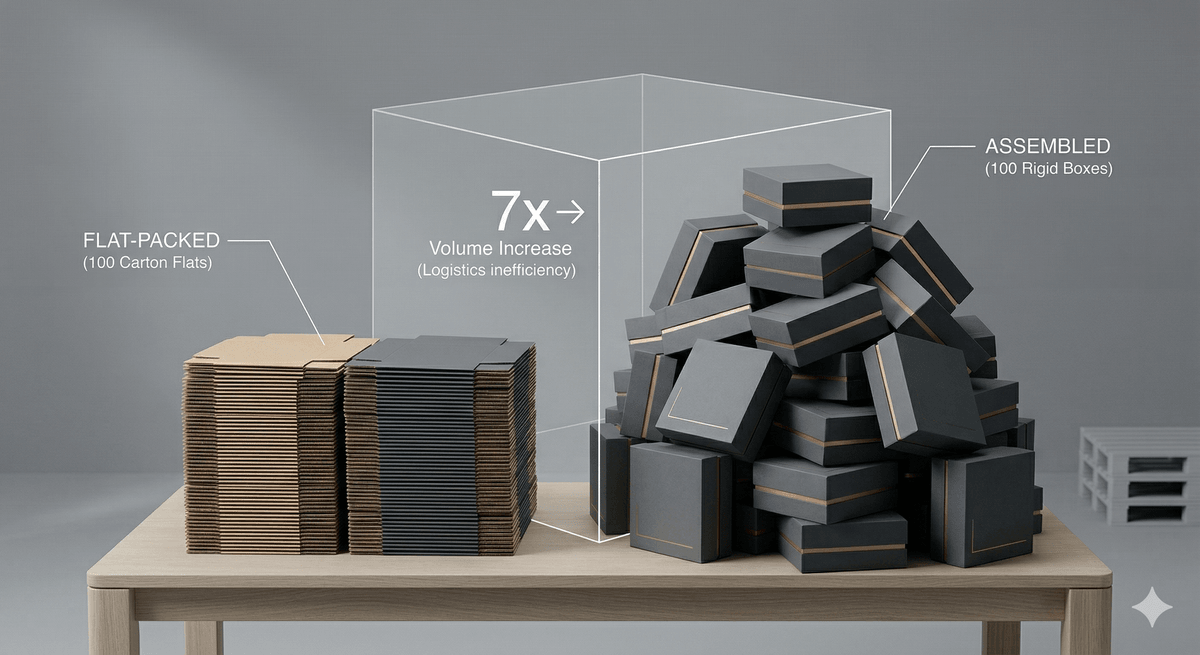
Rigid boxes take up more space and increase shipping volume. Folding cartons ship flat and are more space-efficient.
Practical tip:
If shipping cost is a concern, consider folding cartons or optimized packaging dimensions.
8. Customization Level
The more customized the packaging, the higher the cost.
Customization includes:
- special shapes
- custom inserts
- premium materials
- multiple finishing techniques
Balance strategy:
Focus on the elements that directly affect your product presentation and customer experience.
Quick Summary
The cost of custom packaging mainly depends on:
- Box size and dimensions
- Material selection
- Printing and finishing
- Box structure
- Order quantity (MOQ)
- Inserts and internal packaging
- Shipping efficiency
There is no single lowest-cost option. The most cost-effective solution depends on your product, brand positioning, and order volume.
There is no “cheapest” option for every case — only the most suitable solution based on your product and budget.
How to Estimate Your Packaging Cost
Before requesting a quote, prepare:
- box type
- size
- quantity
- material preference
- printing and finishing requirements
- insert needs
Providing clear details helps get a more accurate quotation and reduces back-and-forth communication.
Final Thoughts
Packaging cost should be evaluated based on total value, not just unit price
A well-designed packaging solution can improve product presentation, reduce damage, and support brand positioning, which often justifies the investment.
Need a Faster Packaging Quote?
QX Packs is a Shenzhen-based custom packaging manufacturer since 2004, providing custom rigid boxes and custom folding boxes for global brands.
If you are planning a custom packaging project and need a clear cost estimate, working with an experienced manufacturer can help you avoid unnecessary costs and make better decisions.
Send your box type, size, quantity, material preference, and product photos to QX Packs on WhatsApp. Our team will review your project and provide practical suggestions for your custom packaging.