Introduction
They affect how your box looks, how premium your brand feels, how accurate your logo appears, and how much your final packaging costs.
For many brands, the challenge is not choosing the most expensive finish. The real challenge is choosing the right combination of printing, material, and surface treatment based on product positioning, quantity, budget, and launch timeline.
This guide explains how packaging printing and finishing affect custom packaging cost and brand perception, so you can make better decisions before sampling and mass production.
What Does Printing Mean in Custom Packaging?
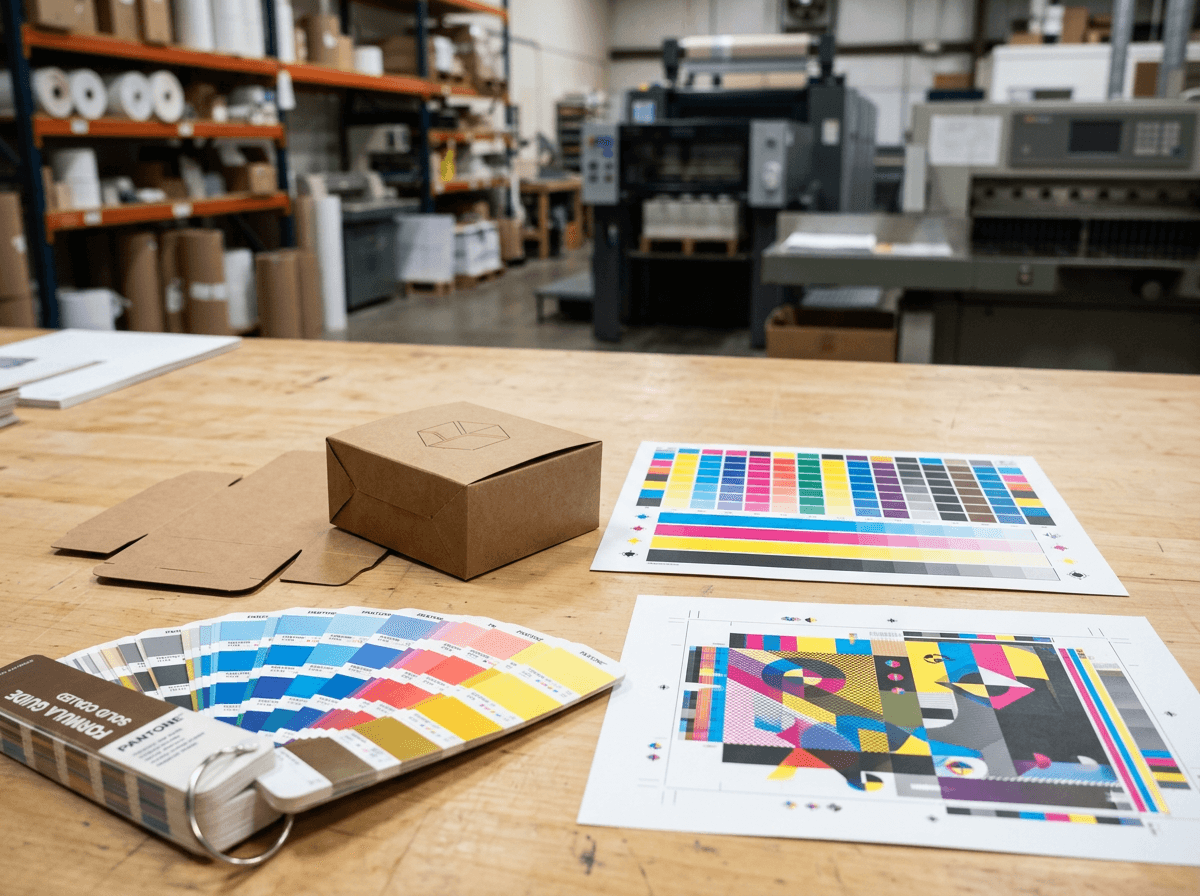
In custom packaging, printing refers to how your logo, colors, patterns, product information, and brand graphics are applied to the box surface.
Common printing options include:
- CMYK printing
- Pantone color printing
- Offset printing
- Digital sampling
- Logo printing
- Full-surface artwork printing
The right printing method depends on your order quantity, color accuracy requirements, box material, and final packaging structure.
For example, custom folding boxes often use full-color printed paperboard, while custom rigid boxes usually use printed or specialty wrapped paper over rigid board.
What Does Finishing Mean in Custom Packaging?
Finishing refers to the surface treatment added after printing.
It improves the look, texture, durability, and perceived value of your packaging.
Common finishing options include:
- Matte lamination
- Gloss lamination
- Matte varnish
- Gloss varnish
- Soft-touch lamination
- Foil stamping
- Silver foil stamping
- Embossing
- Debossing
- Spot UV
- Textured paper
- Die-cut windows
Finishing can make a simple box feel more premium, but it also increases cost, production complexity, and sometimes sample lead time.
That is why finishing should be chosen based on brand positioning and practical packaging needs, not only appearance.
How Printing Affects Custom Packaging Cost
Printing cost is mainly affected by artwork complexity, color requirements, printing method, material surface, and order quantity.
1. Number of Colors
Simple one-color logo printing is usually more cost-effective than full-color artwork.
Full CMYK printing gives more design flexibility, but it may require more careful color control, especially for brand colors, gradients, and photographic images.
If your brand has strict color requirements, Pantone color matching may be recommended.
2. Printing Area
A small logo on the lid usually costs less than full-surface printing across the entire box.
Large printed areas require more ink, more setup work, and more attention during production to avoid color inconsistency or visible defects.
3. Material Surface
Different materials affect print performance.
Coated paper usually gives cleaner and brighter printing results. Kraft paper has a more natural look but may make colors appear darker or less saturated. Textured paper can look premium, but fine printing details may not appear as sharp.
4. Order Quantity
Printing setup cost is spread across the total order quantity.
This means small orders usually have higher unit cost, while larger orders can reduce the cost per piece.
For custom packaging, quantity is one of the most important factors affecting final unit price.
How Finishing Affects Custom Packaging Cost

Finishing adds visual value, but each process also adds cost and production time.
Some finishes require extra tools, molds, pressure, heat, alignment, or manual handling.
Common Finishing Options and Cost Impact
| Finishing Option | Visual Effect | Cost Impact | Best For |
|---|---|---|---|
| Matte Lamination | Clean, smooth, modern surface | Low to medium | Skincare, electronics, lifestyle packaging |
| Gloss Lamination | Bright and shiny surface | Low to medium | Retail boxes, promotional packaging |
| Matte Varnish | Natural matte surface protection | Low to medium | Folding boxes, retail cartons |
| Gloss Varnish | Light shine and surface protection | Low to medium | Retail packaging, promotional boxes |
| Soft-Touch Lamination | Smooth, premium hand feel | Medium | Luxury rigid boxes, gift boxes |
| Foil Stamping | Metallic logo or details | Medium to high | Jewelry, cosmetics, fragrance packaging |
| Silver Foil Stamping | Cool metallic silver effect | Medium to high | Electronics, beauty, premium retail packaging |
| Embossing | Raised logo or pattern | Medium to high | Premium brand packaging |
| Debossing | Pressed-in logo effect | Medium to high | Minimal luxury packaging |
| Spot UV | Glossy highlight on selected areas | Medium | Logos, patterns, product names |
| Die-Cut Window | Product visibility | Medium to high | Folding boxes, display packaging |
A practical rule: use one or two strong finishing details instead of adding too many effects on one box.
Too many finishes can make packaging look busy, increase cost, and create more production risks.
How Printing and Finishing Affect Brand Perception
Customers often judge product value before they open the box.
Packaging printing and finishing influence how professional, premium, natural, or modern your brand feels.
For Premium Brands
Rigid boxes with soft-touch lamination, foil stamping, embossing, or textured paper can create a stronger luxury impression.
This works well for jewelry, fragrance, skincare gift sets, premium electronics, and handmade gift boxes.
For Clean and Modern Brands
Matte lamination, simple logo printing, clean typography, and limited colors can create a refined and professional look.
This is suitable for skincare, electronics accessories, candles, and lifestyle products.
For Natural or Eco-Focused Brands
Kraft paper, uncoated paper, simple printing, and recyclable paper materials can support a more natural packaging style.
However, brands should avoid overclaiming sustainability unless the material and production details are confirmed.
For Retail Products
Bright printing, clear product information, spot UV, window cut-outs, or display-ready structures can help products stand out on shelves.
This is especially useful for folding boxes, display boxes, cosmetics, toys, and promotional packaging.
Printing and Finishing Choices by Box Type
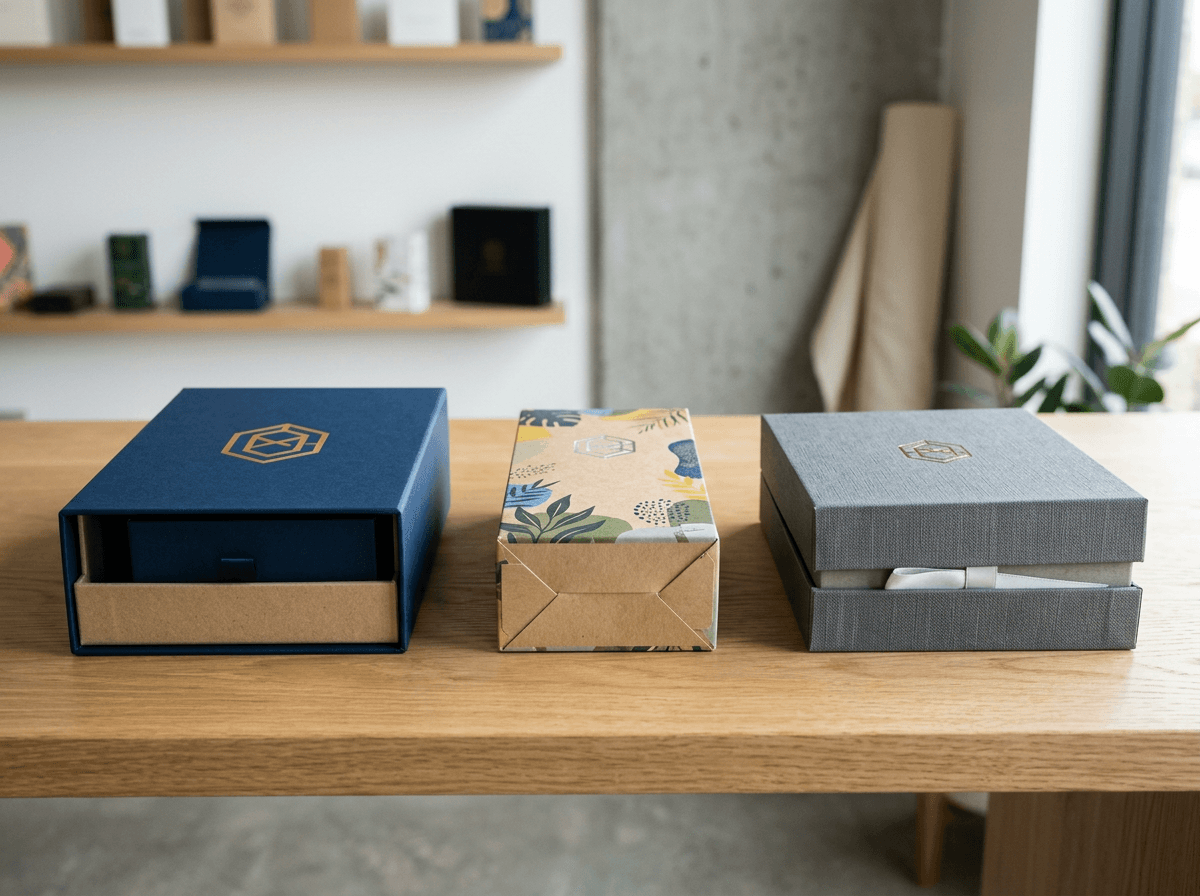
Different box structures work better with different printing and finishing options.
Custom Rigid Boxes
Custom rigid boxes are often used for premium products. They work well with:
- Wrapped printed paper
- Specialty textured paper
- Foil stamping
- Embossing
- Debossing
- Soft-touch lamination
- Custom inserts
Rigid boxes are a strong choice when brand perception and product presentation are more important than the lowest unit cost.
Custom Folding Boxes
Custom folding boxes are cost-effective and suitable for retail packaging. They work well with:
- CMYK printing
- Pantone printing
- Matte or gloss lamination
- Matte or gloss varnish
- Spot UV
- Die-cut windows
- Foil logo details
Folding boxes are often better for larger quantities, lightweight products, and brands that need efficient shipping and storage.
Handmade Gift Boxes
Handmade gift boxes often use premium finishes to improve perceived value. They work well with:
- Textured paper
- Foil stamping
- Embossing
- Ribbon details
- Magnetic closure structures
- Velvet or EVA inserts
Because many handmade boxes require more manual work, finishing details should be confirmed carefully during sampling.
How to Choose the Right Printing and Finishing Combination
Before choosing printing and finishing, answer these questions:
- What is your product category?
- Is your product premium, mid-range, or cost-sensitive?
- Do you need strong shelf impact or a minimal brand look?
- Is color accuracy important for your logo?
- What is your target quantity?
- What is your sample approval deadline?
- Do you need inserts or only the outer box?
- Will the packaging be used for retail, e-commerce, gifting, or wholesale?
If your budget is limited, start with a clean structure, good material, accurate printing, and one finishing detail.
Do not spend too much on unnecessary surface effects before confirming the box structure, size, and product fit.
Practical Cost-Control Tips
If you want packaging to look professional without overpaying, use these practical rules:
- Use standard box structures when possible.
- Keep the artwork clean and avoid unnecessary full-surface printing.
- Choose one key finishing effect instead of multiple decorative processes.
- Use Pantone only when color accuracy is truly important.
- Confirm the dieline and artwork before sampling.
- Avoid changing logo size, material, or finishing after sample approval.
- Increase quantity when possible to reduce unit cost.
- Ask your supplier for alternative finishing options if the first quote is too high.
A good packaging supplier should not only quote what you request. They should also help you adjust printing and finishing choices based on your budget, product value, and production risks.
What to Prepare Before Asking for a Quote
To receive an accurate quotation and practical printing or finishing suggestions, please prepare the following details before contacting a packaging manufacturer:
1. Box Type
Share the box style you need, such as a folding carton, corrugated box, rigid box, drawer box, lid and base box, or handmade gift box.
Reference photos, structure photos, and detail images are very helpful, especially when the box has a special opening style or internal structure.
2. Complete and Accurate Dimensions
Provide the box size in length × width × height.
If the product size is available, please also share it so the supplier can check whether the packaging structure and insert fit are suitable.
If you are not sure about the exact box size, you can send us the product sample or the items that need to be packed. We can check the product dimensions, recommend a suitable box size, and suggest the right insert layout if needed.
Accurate dimensions help avoid wrong quotations, repeated sampling, and production adjustments.
3. Material Requirements
Confirm the main material or box category, such as paperboard folding box, corrugated box, or handmade rigid box.
If you are not sure which material is suitable, the supplier can recommend options based on your product weight, presentation needs, budget, and order quantity.
4. Surface Treatment
Let the supplier know whether you need matte lamination, gloss lamination, matte varnish, or gloss varnish.
Surface treatment affects appearance, touch, durability, and final cost.
For example, matte lamination gives a cleaner and more premium look, while gloss lamination creates a brighter retail effect.
5. Special Finishing Requirements
Confirm whether you need foil stamping, silver foil, spot UV, embossing, debossing, or other surface effects.
These details should be marked clearly on the artwork or explained before sampling.
If you are not sure which finish is suitable, your supplier can recommend options based on your brand style and target budget.
6. Insert Requirements
If the box needs an insert, provide the insert material, product dimensions, layout requirements, and protection needs.
Common insert options include paperboard inserts, EVA, foam, velvet, molded pulp, and plastic trays.
The insert affects both protection and presentation, so it should be considered together with the box structure.
7. Number of Designs and Quantity for Each Design
Tell the supplier how many versions you need and the quantity for each design.
For example: 3 designs, 1,000 pcs per design.
This directly affects printing setup, MOQ, unit cost, and production arrangement.
8. Packing and Delivery Requirements
Confirm whether the goods need export packing for international shipment, or whether they will be delivered to a warehouse, forwarder, or factory address in China.
Packing method, carton size, shipping marks, and pallet requirements may affect the final quotation.
Clear information helps the supplier quote faster, reduce back-and-forth communication, and recommend more suitable printing, finishing, and structure options.
Need Faster Advice Before Requesting a Quote?
If you are not sure which printing method or finishing option is suitable, send us your box type, logo, size, quantity, and reference photos on WhatsApp.
We can help you check the structure, material, and surface treatment before sampling.
Frequently Asked Questions
What is the most cost-effective printing option for custom packaging?
CMYK printing is commonly used for full-color packaging and is cost-effective for many custom box projects. For strict brand color requirements, Pantone color printing may be recommended.
Does foil stamping increase packaging cost?
Yes. Foil stamping usually increases cost because it requires additional setup, tooling, material, and production steps. It is best used for logos, brand names, or selected premium details.
Is embossing worth the extra cost?
Embossing can be worth the cost for premium packaging because it adds texture and improves brand perception. However, it should be used selectively, especially for small orders or cost-sensitive projects.
Which finish is better, matte or gloss lamination?
Matte lamination gives a clean and modern look. Gloss lamination gives a brighter and more reflective surface. The better choice depends on your brand style and product category.
Can I reduce packaging cost without making the box look cheap?
Yes. Use a clean box structure, good material, accurate printing, and one strong finishing detail. Avoid too many decorative effects that increase cost but do not improve the customer experience.
Conclusion
Printing and finishing directly affect custom packaging cost, brand perception, and production complexity.
The best choice is not always the most expensive one. A well-balanced packaging solution should match your product value, brand positioning, order quantity, and budget.
For many brands, the most practical approach is simple: choose the right box structure first, confirm accurate printing, then add one or two finishing details that truly improve the final presentation.
QX Packs is a custom packaging manufacturer in Shenzhen since 2004, supporting global brands with rigid boxes, folding boxes, handmade gift boxes, custom inserts, and practical printing and finishing recommendations.
Need help choosing printing and finishing for your custom packaging?
Send us your box type, size, material, finishing requirements, insert details, quantity, and packing needs. QX Packs will recommend suitable options and provide a detailed quote within 24 hours.