
Packaging for chargers and electronics accessories needs to do more than look clean.
Packaging for chargers and electronics accessories needs to do more than look clean.
For products such as charging cables, wall chargers, phone cases, earphones, USB accessories, batteries, adapters, and small electronics accessories, packaging structure directly affects retail display, product protection, customer understanding, and final cost.
The right packaging should hold the product securely, present the product clearly, support shelf or hanging display, and keep production cost under control.
This guide explains how to choose the right box structure, insert style, blister option, paper card, and hanging method for electronics accessory packaging.
Why Electronics Accessory Packaging Needs Practical Structure Planning
Electronics accessories are usually small, but the packaging still needs careful planning.
Common challenges include:
- Small product size
- Cable organization
- Plug protection
- Multiple accessories in one box
- Retail shelf display
- Hanging display needs
- Cost control for larger quantities
- Clear product information on the box
If the box is too loose, the product may move during shipping.
If the insert is too complicated, the packaging cost may increase.
If the hanging hole is weak, the box may not display well in retail stores.
That is why the box structure should be confirmed before focusing on surface design.
Common Packaging Structures for and Electronics Accessories
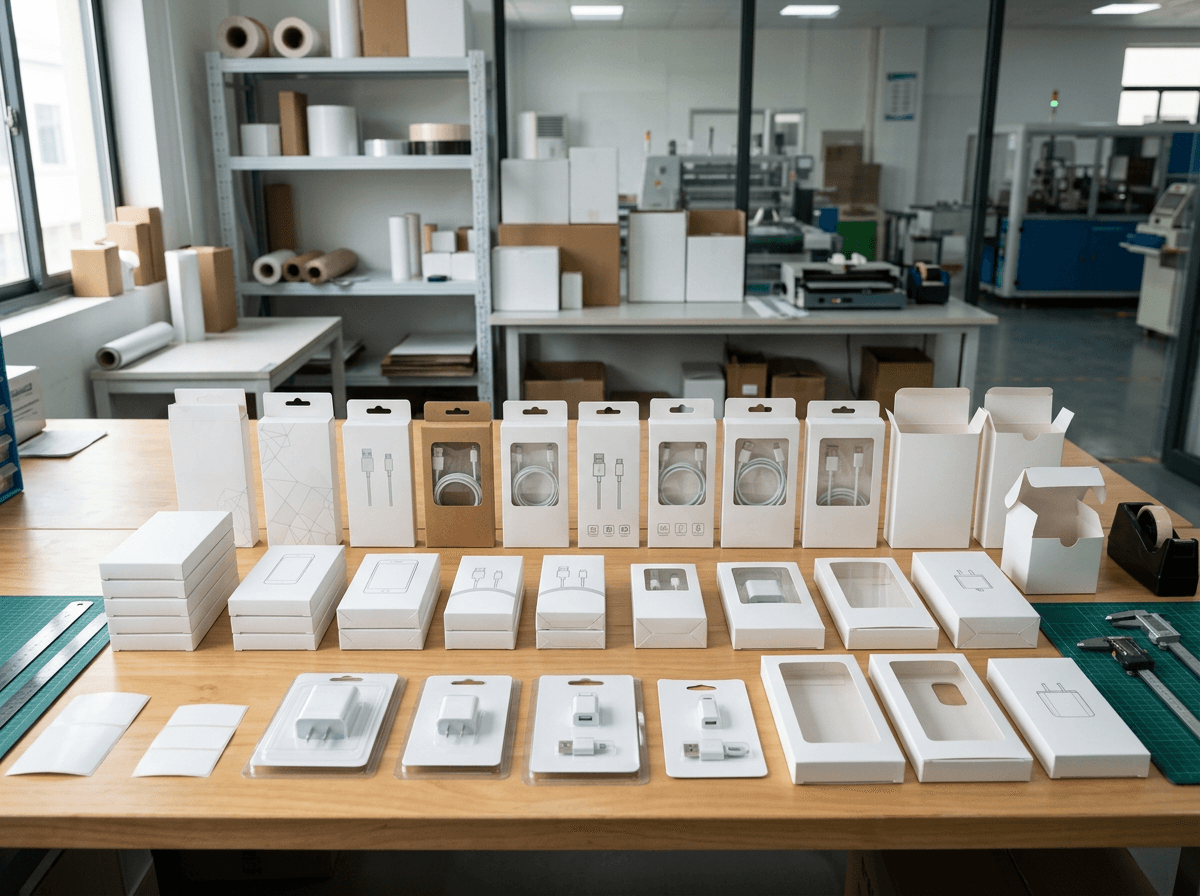
Different electronics accessories need different packaging structures.
A charging cable may need a paper card or hanging box. A phone case may need a window box or blister tray. Earbuds, earphones, and USB accessories may need paperboard insert, plastic trays, or compact retail boxes. Batteries may require secure internal separation and clear retail display.
The most suitable structure depends on product size, weight, retail channel, hanging method, protection needs, and budget.
1. Custom Folding Boxes
Custom folding boxes are one of the most practical options for charger packaging.
They are lightweight, cost-effective, and suitable for retail display. They can also be printed with product information, barcodes, instructions, and brand graphics.
Folding boxes are suitable for:
- Wall chargers
- USB chargers
- Power adapters
- Charging cables
- Phone accessories
- Small electronics accessories
For many charger brands, folding cartons are the best starting point because they balance structure, printing, shipping efficiency, and cost.
2. Hanging Boxes and Hanging Cards
If the product will be displayed on retail hooks, a hanging tab or hang hole can be added to the box.
This structure is useful for:
- Supermarket display
- Electronics retail stores
- Convenience store shelves
- Accessory wall displays
- Promotional retail packaging
The hanging area should be strong enough to support the product weight. For heavier chargers or multi-piece kits, the material thickness and box structure should be checked carefully during sampling.
3. Window Packaging Boxes
A window box allows customers to see part of the product before purchase.
This can work for:
- Charging cables
- Adapters
- Earbuds and accessories
- Small electronic accessories
- Retail gift sets
- Phone cases
However, window packaging may increase production complexity. If cost control is important, a printed product image may be more practical than a clear window.
4. Blister Packaging and Plastic Trays
Blister packaging and plastic trays are common for electronics accessories that need product visibility and fixed placement.
They are often used for:
- Charging cables
- Earphones
- USB accessories
- Batteries
- Phone accessories
- Small electronic parts
Blister trays can hold the product clearly in place, while paper backing cards can provide product information and retail display support.
However, blister structures may involve tooling, material selection, and assembly steps, so they should be confirmed carefully before sampling.
5. Paper Insert Cards
Paper insert cards are a practical option for lightweight electronics accessories.
They can hold cables, USB products, earphones, batteries, or small accessories in a simple and cost-controlled way.
Paper cards are especially useful when the product needs hanging display but does not require a full box structure.
6. Drawer Boxes or Rigid Boxes
For premium electronics accessories, drawer boxes or rigid boxes can create a better unboxing experience.
They are more suitable for:
- Premium charger sets
- Smart device accessories
- Brand gift sets
- Higher-value electronics products
- Influencer or PR packaging
Rigid boxes look more premium, but they cost more and take up more shipping space. For standard charger packaging, folding boxes are usually more cost-effective.
Insert Options for Electronics Accessories
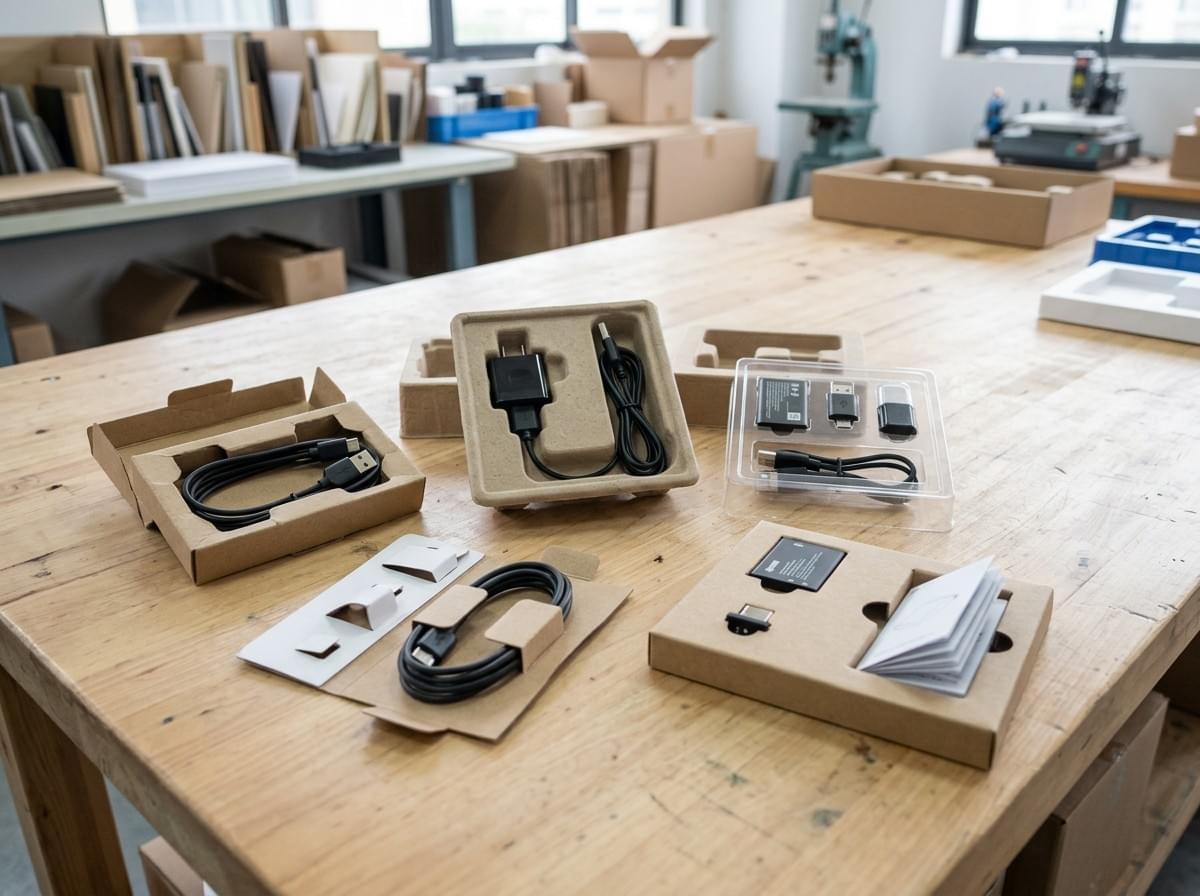
The insert is important because chargers, cables, and accessories often need to be held in place.
A good custom insert can improve both protection and presentation.
Paperboard Inserts
Paperboard inserts are practical and cost-effective.
They can separate the charger, cable, and small accessories inside the box. They are also easier to customize and suitable for many retail packaging projects.
Best for:
- Chargers
- Cable sets
- Light electronics accessories
- Standard retail boxes
EVA or Foam Inserts
EVA and foam inserts offer better protection and a more premium look.
They are suitable when the product needs a cleaner internal presentation or stronger support.
Best for:
- Premium electronics accessories
- Gift sets
- Fragile components
- Higher-value products
However, EVA and foam inserts can increase cost. They should be used when the product value or protection requirement justifies the extra cost.
Molded Pulp Inserts
Molded pulp inserts can be considered when the brand wants a more paper-based or recyclable internal structure.
Best for:
- Eco-conscious electronics brands
- Small device accessories
- Products that need shaped protection
The final choice depends on product shape, quantity, and tooling requirements.
No Insert Option
Some charger packaging does not need a separate insert.
If the box structure is tight and the product is light, the supplier may recommend a folded paper structure or simple internal flap instead.
This can help reduce cost and simplify production.
Hanging Options for Retail Display
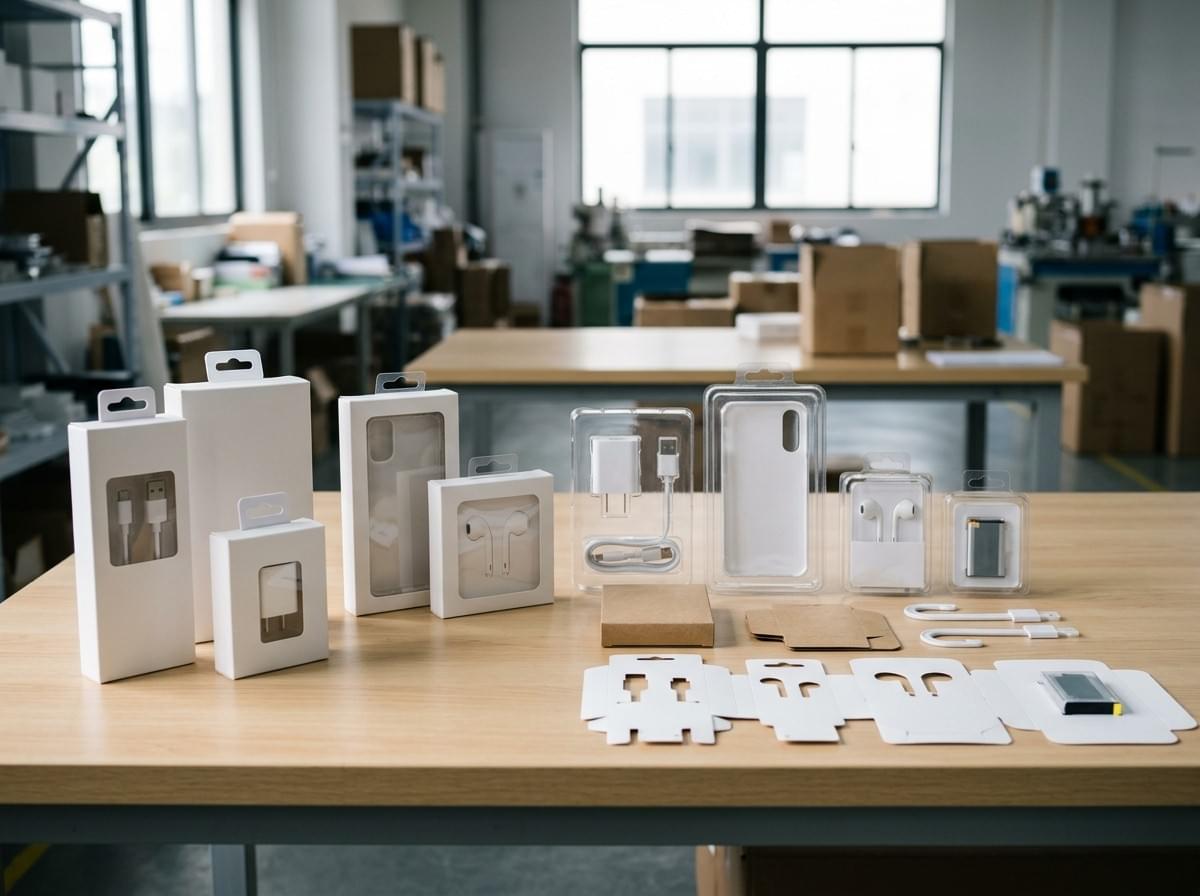
Hanging display is a common requirement for electronics accessory packaging.
The most common options include:
Hang Hole
A hang hole is cut directly into the top part of the box or hanging tab.
It is simple and cost-effective.
Best for:
- Lightweight charger boxes
- Cable packaging
- Small accessory boxes
Reinforced Hanging Tab
A reinforced hanging tab gives better support for slightly heavier products.
Best for:
- Heavier chargers
- Multi-piece charging kits
- Retail packaging that hangs for a long time
Plastic Hanging Hook
A plastic hook can also be added, but it may increase cost and assembly steps.
For most paper-based charger packaging, a paper hang tab or die-cut hang hole is more practical.
How to Balance Retail Display and Cost
Not every charger box needs a premium structure.
For many electronics accessories, the best solution is a clean folding box with clear product information, strong enough paperboard, and a practical hanging hole.
To control packaging cost, consider these rules:
- Use a standard folding box structure when possible.
- Avoid oversized packaging.
- Choose paperboard inserts before EVA if protection needs are simple.
- Use a hang hole instead of a complex plastic hook when possible.
- Keep printing clean and avoid unnecessary full-surface dark colours.
- Add foil stamping or spot UV only if it supports brand positioning.
- Confirm product size and cable layout before sampling.
- Avoid changing the structure after sample approval.
The goal is not to make the box complicated. The goal is to make the product easy to display, easy to understand, and safe enough for delivery.
Box Structure Guide for Chargers and Electronics Accessories
| Product Type | Suggested Packaging | Insert / Support | Display Option |
|---|---|---|---|
| Charging cable | Hanging box / paper card | Paper card / blister tray | Paper tab / plastic hook |
| Wall charger | Folding box | Paperboard insert | Hang hole / shelf display |
| Phone case | Window box / blister box | Inner tray | Retail shelf / hanging display |
| Earphones | Window box / blister packaging | Blister tray / paper insert | Hanging display |
| USB accessory | Small folding box | Paperboard insert / blister tray | Shelf / hook display |
| Battery | Blister card / folding box | Separated tray / paper card | Hanging display / shelf display |
This table is only a starting point. The final structure should be confirmed based on product size, weight, quantity, insert needs, and retail display requirements.
What to Confirm Before Sampling
Before making a charger packaging sample, confirm the product and packaging details clearly.
1. Product Size and Weight
Provide the charger, cable, adapter, or accessory size.
If there are multiple items in one set, provide the size of each item.
Product weight is also important because it affects material strength, insert design, and hanging display safety.
2. Product Layout Inside the Box
Confirm how the product should be placed inside the box.
For example:
- Charger only
- Charger plus cable
- Charger plus adapter
- Cable set
- Multiple accessories
- Product plus instruction manual
The internal layout affects box size, insert structure, and sample accuracy.
3. Retail Display Method
Confirm whether the packaging will be placed on a shelf, hung on a hook, or used for e-commerce shipping.
If the box needs to hang, the supplier should check the hanging hole position, paperboard strength, and product weight.
4. Insert Requirement
Tell the supplier whether you need paperboard inserts, EVA inserts, foam inserts, molded pulp inserts, or no insert.
If you are not sure, send product photos or product samples. The supplier can recommend a suitable internal structure.
5. Printing and Finishing
Electronics accessory packaging usually works well with clean printing, matte lamination, spot UV, or simple foil details.
Avoid too many surface effects if the product is cost-sensitive.
6. Quantity for Each Design
If you have several charger models, cable types, or adapter versions, confirm how many designs you need and the quantity for each design.
This affects printing setup, MOQ, unit cost, and production planning.
Common Mistakes in Electronics Accessory Packaging
1. Using One Structure for Every Product
Charging cables, chargers, phone cases, earphones, USB accessories, and batteries do not always fit the same packaging structure.
A cable may work well with a paper card or hanging box. A phone case may need a window box or blister tray. Batteries may require separated trays or secure internal support.
Choosing one structure for all products may look simple, but it can lead to poor fit, weak display, or unnecessary cost.
2. Making the Packaging Too Large
Oversized packaging increases material cost, carton volume, and shipping space.
For small electronics accessories, packaging should be compact, but still easy to display, open, and understand.
3. Ignoring Hanging Strength
Many electronics accessories are sold on hooks.
If the paper tab, die-cut hang hole, or plastic hook is not strong enough, the package may bend, tear, or fall during retail display.
The hanging method should be checked based on product weight and display time.
4. Choosing Blister or EVA Inserts Too Early
Blister trays, EVA inserts, and foam inserts can improve product display and protection, but they may also increase cost, tooling, and sampling time.
For lightweight products, paper cards, paperboard inserts, or folded internal structures may be enough.
5. Adding Too Many Surface Finishes
Foil stamping, spot UV, embossing, and dark full-surface printing can increase cost.
For electronics accessory packaging, clean structure, clear display, accurate product fit, and practical hanging design are often more important than decorative effects.
6. Not Confirming the Actual Product Sample
Small differences in charger size, cable thickness, phone case shape, earphone layout, USB size, or battery dimensions can affect the insert and box fit.
Before sampling, send accurate product dimensions, photos, or physical samples whenever possible. This helps the supplier recommend a more suitable box size, insert layout, and display structure.
Need Help Planning Charger Packaging?
If you are not sure which box structure, insert, or hanging option is suitable, send us your product size, product weight, reference packaging image, target quantity, and display requirement.
QX Packs can help you compare folding boxes, inserts, hanging tabs, and retail-ready structures before sampling.
Frequently Asked Questions
What is the best packaging type for electronics accessories?
For standard chargers, cables, USB accessories, phone cases, earphones, and batteries, the best packaging type depends on product size, weight, retail channel, and display method.
Common options include folding boxes, hanging boxes, window boxes, blister packaging, paper insert cards, and paperboard inserts.
Can electronics accessory packaging be made with hanging holes or hooks?
Yes. Electronics accessory packaging can use paper hanging tabs, die-cut hang holes, or plastic hanging hooks for retail display.
The right option depends on product weight, packaging material, and how long the product will hang in store.
Are blister trays suitable for electronics accessory packaging?
Yes. Blister trays are commonly used for cables, earphones, USB accessories, batteries, phone accessories, and small electronic parts.
They help display the product clearly and hold it in place, but tooling, material, and assembly should be confirmed before sampling.
Do electronics accessory boxes need inserts?
Not always. Some products can use paper cards, internal flaps, or folded paperboard structures.
If the product needs better protection, cleaner presentation, or fixed placement, paperboard inserts, blister trays, EVA, foam, or molded pulp inserts can be used.
What information should I provide before requesting a quote?
Please provide product type, product size, product weight, packaging style, insert requirements, hanging display method, quantity for each design, and reference images if available.
If the exact box size is not clear, you can send product photos, dimensions, or physical samples. QX Packs can recommend a suitable packaging size and internal layout before sampling.
Conclusion
Good electronics accessory packaging should be practical, clear, and retail-ready.
For chargers, charging cables, phone cases, earphones, USB accessories, batteries, and small electronics accessories, the right structure may be a folding box, window box, blister tray, paper insert card, hanging box, or premium rigid box depending on product value and retail channel.
If the product is higher-value or sold as a gift set, drawer boxes, rigid boxes, EVA inserts, or foam inserts can improve presentation and protection.
The best packaging choice depends on product size, weight, retail display method, insert needs, quantity, and target budget.
QX Packs is a custom packaging manufacturer in Shenzhen since 2004, supporting global brands with electronics packaging, custom folding boxes, custom inserts, and retail-ready packaging structures.
Need Help Planning Electronics Accessory Packaging?
If you are not sure which box structure, insert, blister tray, paper card, or hanging option is suitable, send us your product size, product weight, reference packaging image, target quantity, and display requirement.
QX Packs can help you compare folding boxes, window boxes, blister packaging, paper cards, inserts, hanging tabs, and retail-ready structures before sampling.