
Custom Watch Boxes: How to Choose the Right Structure, Pillow, and Insert
A custom watch box should do more than look premium.
It needs to hold the watch securely, support the strap or bracelet correctly, protect delicate surfaces, organize accessories, and present the product clearly when the box is opened.
This is why watch packaging should be planned around the actual watch—not only around a reference box photo.
A leather-strap watch, a metal-bracelet watch, and a smartwatch set may need different box depths, pillows, inserts, and accessory layouts. Even two watches with a similar case diameter may not fit the same insert if their straps, clasps, crowns, or display positions are different.
This guide explains how B2B buyers can choose a suitable custom watch box structure, pillow, and insert before requesting a quote or approving a sample.
For an overview of QX Packs’ available structures, materials, inserts, and applications, visit our Custom Watch Boxespage.
Quick Answer
The right watch box depends on five main factors:
- Watch case size and thickness
- Strap or bracelet type
- Required display position
- Accessories packed with the watch
- Retail, gifting, storage, or e-commerce use
A lid and base box is often suitable for a classic single-watch presentation.
A hinged box can create a more traditional or premium opening experience.
A drawer box works well when the packaging needs a slide-out presentation or additional compartments.
For the inside, a removable watch pillow is practical for many leather-strap and bracelet watches. A C-shaped holder or fitted insert may provide a more controlled position. EVA, foam, flocked trays, velvet-covered inserts, and mixed-material layouts can also be considered according to protection and presentation needs.
The box structure and insert should be developed together.
What Makes Watch Packaging Different?
A watch is not a simple rectangular product.
It includes a case, crown, dial, lugs, strap or bracelet, buckle or clasp, and sometimes additional components such as an extra strap, charger, tool, instruction booklet, warranty card, or cleaning cloth.
These parts create several packaging challenges.
First, the watch needs to stay in its intended display position. If the pillow is too small, the bracelet may be loose and the watch can rotate. If the pillow is too large, the strap or bracelet may be stretched unnecessarily.
Second, the crown, buttons, buckle, and clasp can create pressure points. The insert needs enough clearance so these parts do not rub against the box or lining.
Third, the watch should be easy to remove. A very tight cavity may hold the product securely but create a poor removal experience. A very loose insert may look unfinished and allow movement during handling.
Finally, the packaging needs to match the sales channel. A watch sold through a boutique may prioritize presentation and display. A watch shipped through e-commerce may need additional outer protection and more secure internal support.
Measure the Watch Before Choosing the Box
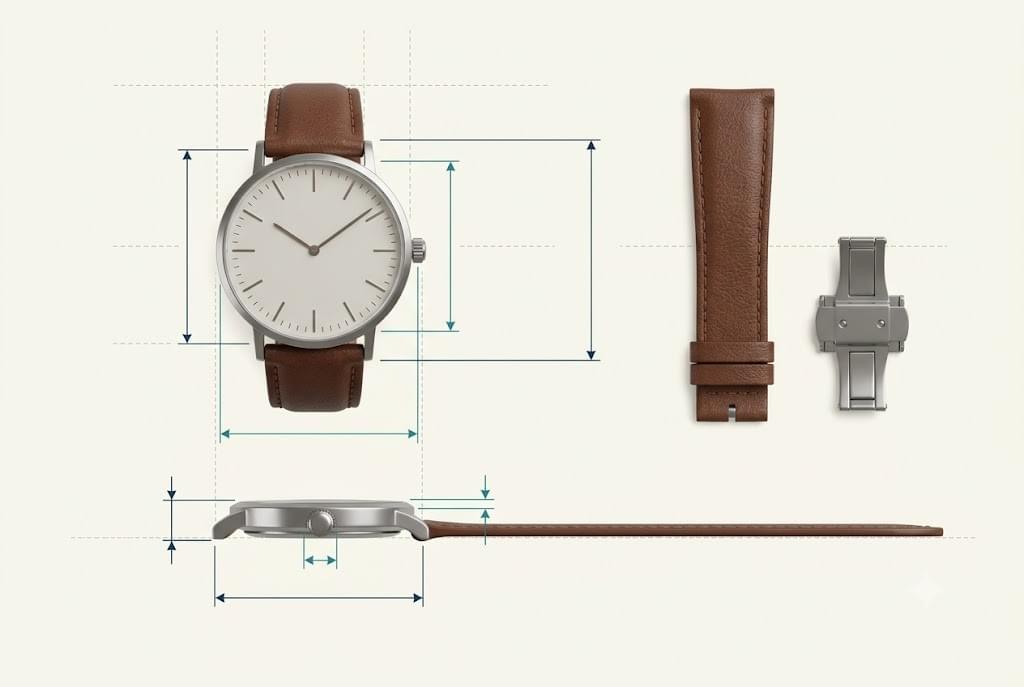
Accurate measurements are essential for custom watch packaging.
Do not send only the case diameter. The supplier needs enough information to understand the complete shape and how the watch should sit inside the box.
Prepare the following details:
1. Watch Case Diameter
Measure the main case diameter and state whether the measurement includes or excludes the crown.
For irregular or rectangular cases, provide the maximum case length and width.
2. Total Case Width
Measure the full width including the crown, side buttons, guards, or other projecting parts.
This helps prevent the case from touching the insert wall.
3. Case Thickness
Measure from the back of the case to the highest point of the crystal or bezel.
Case thickness affects the required box depth and lid clearance.
4. Lug-to-Lug Length
The lug-to-lug measurement helps determine how much space the watch needs from top to bottom, especially when it is displayed flat or supported on a shaped holder.
5. Strap or Bracelet Type
Confirm whether the watch uses:
- Leather strap
- Silicone or rubber strap
- Fabric strap
- Metal bracelet
- Expandable bracelet
- Integrated strap or bracelet
Different materials bend and close differently. A soft strap and a rigid metal bracelet may not fit the same pillow.
6. Buckle or Clasp Size
Provide the buckle or clasp dimensions and show how it closes around the pillow.
A large folding clasp may require more space behind or below the watch.
7. Watch Weight
Weight affects the level of support required from the pillow, insert, and outer box.
Heavier watches may need firmer internal support to remain stable.
8. Display Position
Confirm whether the watch should be:
- Wrapped around a pillow
- Held on a C-shaped support
- Displayed flat
- Displayed at an angle
- Positioned upright
- Packed with the strap open
- Packed with the bracelet closed
Photos from the front, side, and back are very useful. A short video showing the clasp and strap movement can also help during early structure discussion.
Common Custom Watch Box Structures
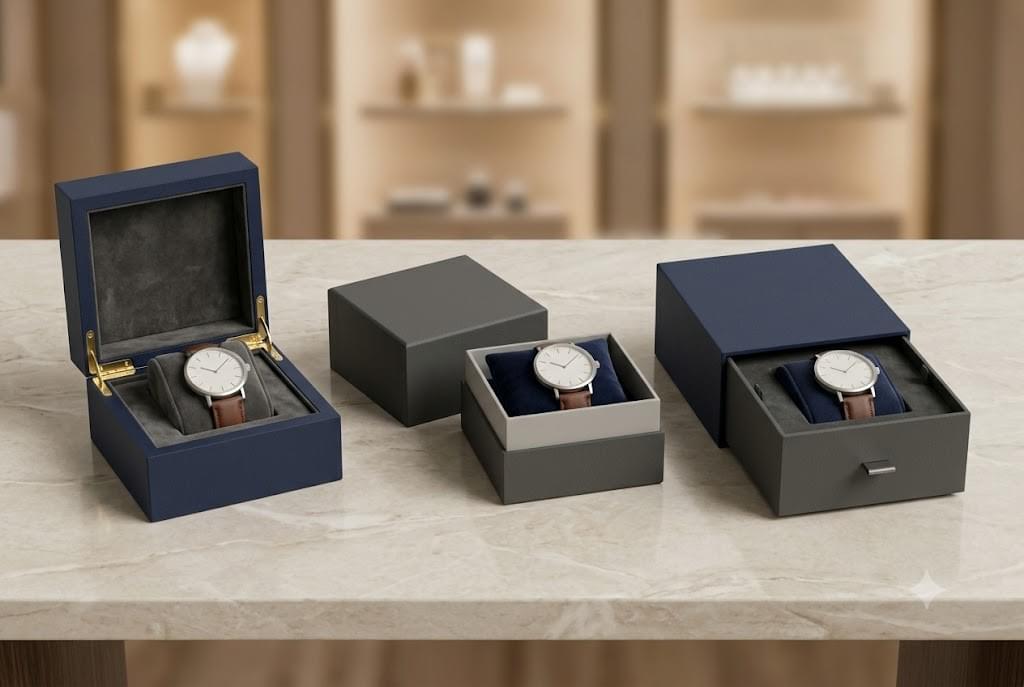
Several box structures can be used for watch packaging. The best choice depends on the desired opening experience, insert layout, product weight, quantity, and budget.
Hinged Watch Boxes
Hinged boxes open from the top and keep the lid connected to the base.
They can be made with rigid paperboard, plastic, MDF, wood, or other suitable base structures, depending on the project. Surface options may include paper, PU leather, velvet, suede, or fabric.
Hinged boxes are suitable when:
- The watch needs a traditional presentation-box appearance
- The product should be visible immediately after opening
- The box uses a fitted pillow or display platform
- The brand wants a lock, hinge, logo plate, or other hardware detail
- The packaging is intended for premium retail or gifting
Hinge position, lid angle, interior height, and product clearance should be checked during sampling.
Lid and Base Watch Boxes
A lid and base box has a separate top and bottom.
This structure provides a clean, classic presentation and can work well for a single watch, watch gift set, or accessory combination.
It is suitable when:
- The opening method should be simple
- The product needs a stable rigid structure
- The insert layout is relatively straightforward
- The brand wants a premium appearance without a complicated mechanism
- Cost and production practicality need to be balanced
A fitted pillow, velvet-covered tray, EVA insert, or paperboard platform can be placed inside the base.
Learn more about this structure on our Lid & Base Boxes page.
Drawer Watch Boxes
Drawer boxes use an outer sleeve and an inner sliding tray.
They create a controlled reveal and provide space for a ribbon pull, finger notch, fitted insert, or accessory compartment.
They are suitable when:
- The brand wants a slide-out opening experience
- The watch is packed with an extra strap or small accessory
- The packaging needs separate compartments
- The watch should remain centered while the tray is opened
- The product is part of a gift or limited-edition set
The tray must slide smoothly without being too loose or too tight. Product weight, tray depth, sleeve strength, and ribbon position should be tested with the physical sample.
See additional structural examples on our Drawer Style Boxes page.
Window and Multi-Watch Boxes
A window box allows the product to remain visible before the package is opened. This structure may be suitable for retail counters, promotional watches, or display-oriented projects.
Multi-watch boxes can be designed for two watches or a larger collection. Each watch normally needs its own pillow, cavity, or tray position.
For multi-watch layouts, confirm:
- Number of watches per box
- Distance between watches
- Pillow removal space
- Lid clearance
- Total product weight
- Whether the box is for retail presentation or long-term storage
Choosing the Right Watch Pillow or Insert
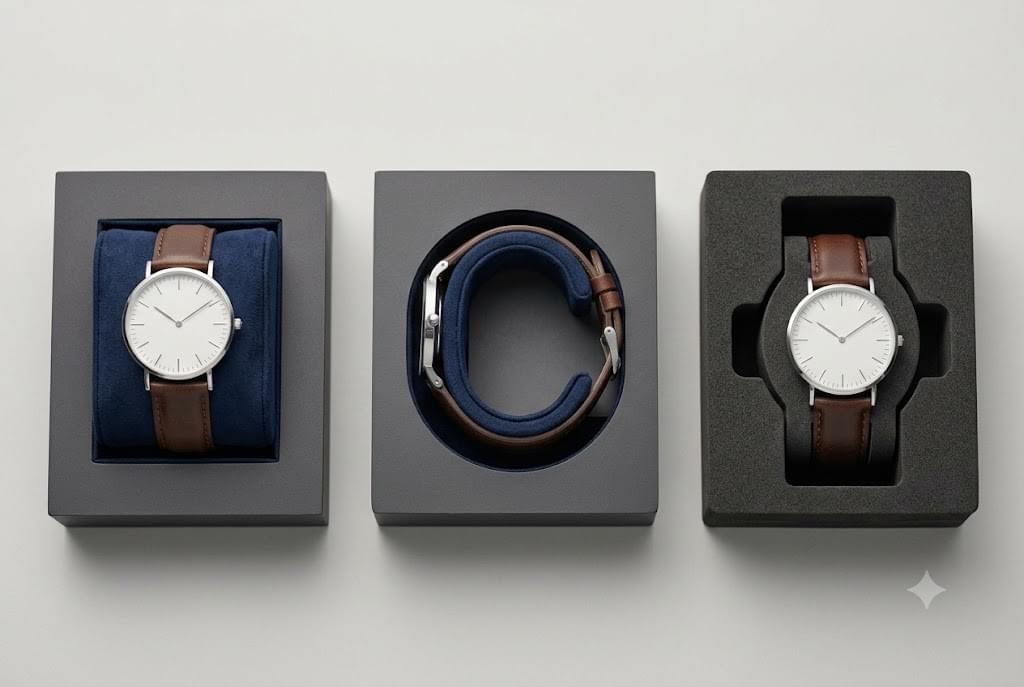
The interior should be selected according to how the watch needs to be held and displayed.
Removable Watch Pillows
A removable pillow is commonly used for watches with flexible straps or bracelets.
It allows the customer to lift the watch and pillow out of the box together. The pillow may be wrapped with velvet, suede, PU leather, fabric, or another suitable surface material.
Before confirming the pillow, check:
- Pillow width and circumference
- Pillow firmness
- Strap or bracelet tension
- Clasp position
- Surface material
- Ease of removal
- Whether the watch remains centered
The pillow should support the watch without stretching the strap or leaving the bracelet loose.
Fixed Watch Pillows
A fixed pillow stays attached to the tray or base.
This can create a more controlled display and help keep the pillow in position during handling. However, the customer still needs enough space to remove the watch comfortably.
The fixing method should be reviewed during sampling.
C-Shaped Watch Holders
A C-shaped holder supports the watch in a curved display position.
This direction may work for watches that need a cleaner upright presentation or for packaging where the pillow should occupy less visual space.
The curve, opening width, firmness, and surface covering should match the actual strap or bracelet.
EVA or Foam Inserts
A fitted EVA or foam insert can hold the watch, pillow, charger, strap, tool, or other components in separate cavities.
EVA offers a clean, structured appearance and can be covered or combined with fabric and velvet for a more refined finish.
Foam provides cushioning but should be selected according to the watch weight, presentation level, and packaging budget.
For more insert options, review our Custom Inserts page.
Velvet-Covered and Flocked Trays
Velvet-covered trays and flocked inserts create a softer internal appearance. They are commonly used when presentation is important and the watch surface needs to avoid direct contact with harder materials.
The underlying insert still needs enough strength and accuracy to support the product.
Need Help Choosing a Watch Box Structure or Insert?
Not sure whether your watch needs a removable pillow, C-shaped holder, EVA insert, or a compartment layout?
Send QX Packs your watch dimensions, strap or bracelet type, quantity, preferred box style, insert requirements, and reference photos. We can help review the product fit and suggest a practical packaging direction before sampling.
Plan Space for Accessories
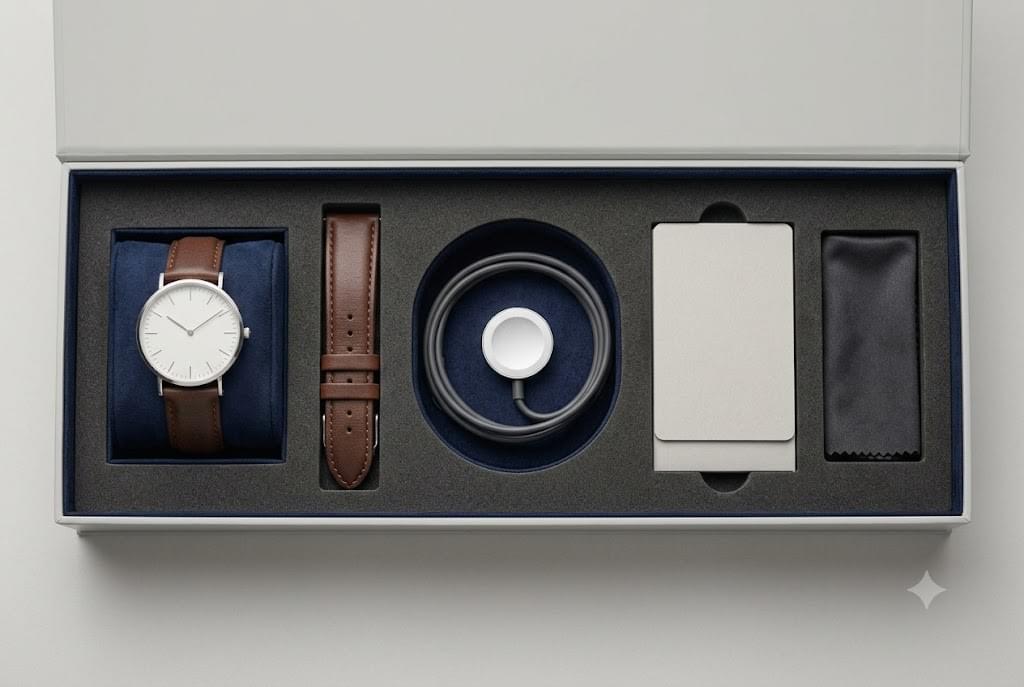
Many watch projects include more than one item.
Possible accessories include:
- Extra strap
- Charging cable or charging dock
- Warranty card
- Instruction manual
- Certificate
- Cleaning cloth
- Adjustment tool
- Hangtag
- Brand card
Do not finalize the outer box before confirming the complete accessory list.
For a smartwatch set, the charger or cable may require its own cavity or covered compartment. For a mechanical or premium watch, the warranty card and certificate may need a pocket inside the lid or a separate section below the watch tray.
A clear top-view layout helps the supplier understand the intended order and opening presentation.
Materials and Finishing Options
Watch boxes can use different base materials, surface wraps, linings, and logo methods.
Possible base directions include rigid paperboard, plastic, MDF, wood, or metal, depending on the structure and project requirements.
Surface materials may include:
- Printed or textured paper
- PU leather
- Velvet
- Suede
- Fabric
- Other specialty wrapping materials
Logo and finishing options may include printing, foil stamping, embossing, debossing, screen printing, laser engraving, or a metal logo plate where appropriate.
The finish should match the brand positioning and base material. More effects do not automatically create better packaging. One well-executed logo treatment and a coordinated material combination are often more effective than using several decorative processes together.
For premium rigid paperboard structures, visit our Custom Rigid Boxes page.
Check the Physical Sample Carefully
A physical sample is important because the artwork alone cannot confirm watch fit.
Before approving the sample, check:
- Does the watch fit the pillow without excessive tension?
- Does the watch remain centered?
- Is there enough clearance around the crown, buttons, buckle, and clasp?
- Does the lid close without pressing the watch?
- Can the watch and pillow be removed comfortably?
- Do accessory compartments hold each component correctly?
- Does the drawer, hinge, lock, or lid operate smoothly?
- Are the lining, wrapping, logo, and hardware aligned?
- Does the watch stay in position during normal handling?
- Is the finished box suitable for the intended retail and shipping method?
Use the actual production watch and all accessories during sample checking whenever possible.
Information to Send for a Watch Box Quote
For a more useful quotation and structure suggestion, prepare:
- Watch type
- Case diameter or case length and width
- Total width including crown or buttons
- Case thickness
- Lug-to-lug length
- Strap or bracelet type
- Buckle or clasp dimensions
- Watch weight
- Display position
- Number of watches per box
- Complete accessory list
- Preferred box structure
- Pillow or insert preference
- Material preference
- Printing or finishing requirements
- Order quantity
- Product photos
- Reference packaging
- Target market and sales channel
If the final structure has not been decided, send the product information first. The box, pillow, and insert can then be compared based on the actual project rather than appearance alone.
Common Watch Packaging Mistakes
Choosing the Box Before Measuring the Watch
A reference photo does not confirm whether the box will fit your watch. Start with the actual product dimensions and display position.
Using One Pillow for Every Watch Model
Different case sizes, bracelets, straps, and clasps may need different pillow sizes or firmness.
Ignoring the Crown and Clasp
The main case measurement may look correct while the crown or folding clasp still touches the insert.
Making the Insert Too Tight
A tight cavity may improve holding force but make the watch difficult to remove or create pressure on delicate parts.
Forgetting Accessories
Adding a charger, strap, manual, or warranty card after the box size is finalized can lead to an inefficient layout or a larger redesign.
Approving Only the Exterior
A premium outer box cannot compensate for poor internal fit. The watch, pillow, insert, accessories, and outer structure should be reviewed as one packaging system.
Frequently Asked Questions
What box structure is best for a single watch?
Hinged and lid and base boxes are common starting points for a single watch. The final choice depends on the desired opening experience, pillow type, materials, budget, and sales channel.
What is the best insert for a watch box?
There is no single best insert for every watch. Removable pillows, fixed pillows, C-shaped holders, EVA inserts, foam inserts, and velvet-covered trays can all be suitable. The right option depends on the watch size, strap or bracelet, weight, display direction, and required presentation.
Can one watch box fit several watch models?
It may be possible when the watch dimensions and strap or bracelet ranges are compatible. However, the pillow and clearance should be tested with every model before approving one common structure.
How should a smartwatch charger be packed?
The charger, cable, or charging dock can be placed in a separate fitted cavity, covered compartment, drawer section, or lower layer. The layout should prevent accessories from touching or scratching the watch.
What should I send before requesting a custom watch box quote?
Send the watch dimensions, weight, strap or bracelet type, display position, quantity, accessory list, preferred box structure, material and finishing requirements, insert needs, product photos, reference packaging, and target market.
Conclusion
A successful custom watch box starts with the watch itself.
The case, crown, strap, bracelet, clasp, weight, display position, and accessories all influence the box depth, pillow size, insert layout, and final structure.
Hinged boxes, lid and base boxes, drawer boxes, window boxes, and multi-watch boxes can all be suitable when they are matched to the actual product and sales channel.
QX Packs is a custom packaging manufacturer in Shenzhen since 2004, supporting B2B brands with watch boxes, rigid boxes, fitted inserts, material options, sample development, and production follow-up.
To discuss a watch packaging project, send your watch size, strap or bracelet type, quantity, preferred structure, material and finishing requirements, insert needs, accessory list, product photos, reference packaging, and target market.