A practical decision guide for buyers ready to move from a preliminary packaging estimate to paid sample development
Receiving a custom packaging quote does not automatically mean that a project is ready for sampling.
A preliminary quote usually confirms that the packaging concept is commercially possible within a certain specification, quantity and budget range. However, it may still be based on reference images, estimated dimensions, preliminary materials or an unconfirmed insert structure.
Before paying for a sample, the buyer and packaging manufacturer should agree on what will actually be developed, what information is still missing and how the sample will be approved.
This step matters because a sample cannot resolve every unanswered decision by itself. If the structure, product size, artwork status or sample scope remains unclear, the project may require repeated revisions before it can move into production.
Quick Answer
Before paying for a custom packaging sample, confirm these seven decisions:
- Whether the quoted price range is acceptable
- What packaging specification the quote is based on
- Whether an actual product sample or accurate dimensions are available
- What the paid sample will include
- Whether the artwork is ready for a production dieline
- Who will approve the sample and how revisions will be handled
- Whether the expected bulk order is commercially realistic
When these decisions are clear, sampling becomes a controlled development stage instead of an open-ended design experiment.
Preliminary Quote vs. Confirmed Sample Specification
A preliminary quotation is often prepared using the information currently available, such as:
- A packaging reference image
- An AI-generated concept image
- Approximate box dimensions
- Estimated order quantity
- Preferred materials
- Logo and finishing requirements
- A general description of the product
This information may be sufficient for estimating a price range. It is not always sufficient for producing an accurate sample.
Before sample development begins, the original estimate should be converted into a more clearly defined sample specification.
| Preliminary quotation may be based on | Sampling should be based on |
|---|---|
| Reference images or visual concepts | A feasible box structure |
| Approximate dimensions | Product-based or confirmed dimensions |
| General material preferences | Selected outer material, board and insert |
| Estimated finishing requirements | Defined logo and finishing scope |
| Total estimated quantity | Quantity per design, size or version |
| Early artwork or AI images | Editable artwork or an agreed artwork plan |
| General product information | Actual product, accurate drawings or verified measurements |
This does not mean every detail must already be perfect. It means that both sides should understand what is confirmed, what is provisional and what the sample is expected to verify.
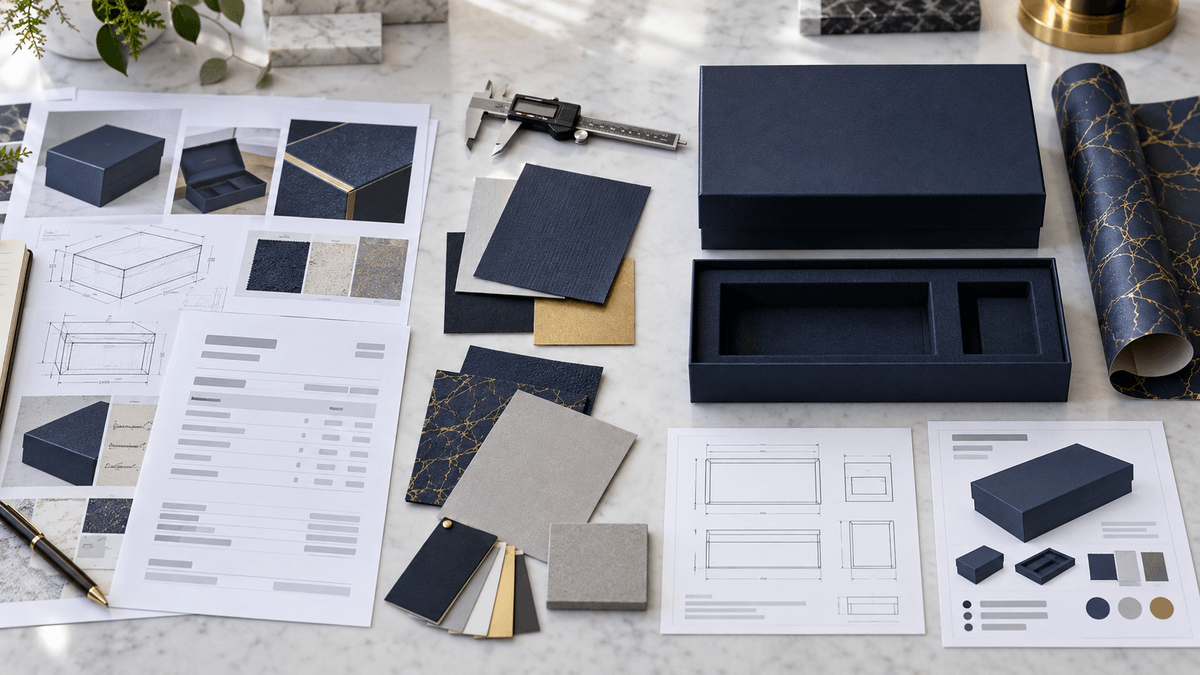
Decision 1: Is the Quoted Direction Commercially Acceptable?
The first decision is not whether the quotation is the lowest available. It is whether the proposed packaging direction is commercially suitable for the project.
Before paying for sampling, the buyer should confirm that the estimated price range is compatible with:
- The target retail price
- The product value
- The expected order quantity
- The launch budget
- The required packaging quality
- The intended sales channel
If the preliminary estimate is already far above the available budget, producing a detailed sample of the same specification may not solve the underlying problem.
The specification should be adjusted first. Possible adjustments may include:
- Simplifying the box structure
- Changing the insert material
- Reducing decorative components
- Selecting a more standard wrapping material
- Limiting the number of special finishes
- Combining several printed elements
- Increasing the production quantity where commercially appropriate
Sampling is most useful after the buyer accepts the general cost direction. It should validate a realistic packaging solution, not postpone an unresolved budget decision.
Decision 2: What Specification Does the Quote Actually Cover?
Two quotations that appear to describe the same box may be based on different assumptions.
Before moving forward, confirm the exact specification behind the quoted price.
The specification should identify:
- Box style and opening method
- Internal and external size basis
- Greyboard thickness
- Outer wrapping material
- Interior lining
- Insert material and construction
- Printing method
- Logo finish
- Additional components
- Quantity per design
- Packing method
- Delivery terms, if included
For example, “custom magnetic rigid box with insert” is not a complete specification. The insert could be EVA foam, molded pulp, paperboard, sponge or a combination of materials. Each option affects appearance, protection, sample development and bulk-production cost.
The quotation should also make clear whether the dimensions are confirmed or estimated. When the size is based only on a reference image, it should not be treated as the final production size.
For projects with fitted compartments, see QX Packs’ custom packaging insert options before confirming the sample structure.
Practical question to ask
If we proceed with the sample based on this quotation, exactly what box, insert, material and finishing combination will be developed?
If this cannot be answered clearly, the sample specification still needs work.
Decision 3: Is the Actual Product Available?
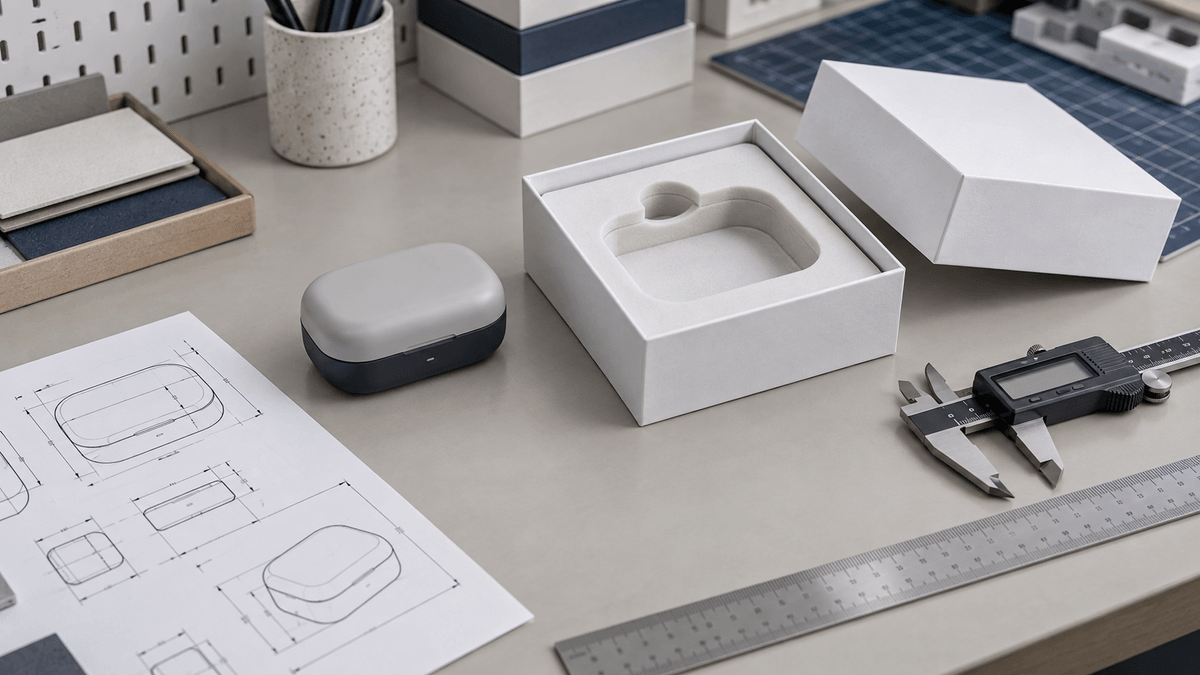
For fitted packaging, the physical product is often more useful than a list of dimensions.
Length, width and height alone may not show:
- Curved surfaces
- Protruding parts
- Fragile areas
- Uneven weight distribution
- Removable accessories
- Cable positions
- Product tolerances
- The correct removal direction
- The space required for fingers or pull tabs
Whenever possible, the buyer should send the actual product before the final sample structure is developed.
If the product is manufactured in China, it is usually more efficient to ask the product supplier to send a production unit directly to QX Packs. This can reduce international shipping time and make it easier to verify the dimensions and fit before the printed sample is produced.
After receiving the product, QX Packs can assess the required internal space and develop a white prototype to test:
- Overall size
- Product fit
- Insert depth
- Compartment position
- Opening method
- Product removal
- Structural stability
Photos and videos can be provided for remote confirmation before the printed sample stage.
If a physical product is not available, the buyer should provide accurate technical drawings or verified measurements. The buyer should also understand that the fit may require further adjustment when the real product becomes available.
Decision 4: What Does the Sample Fee Include?
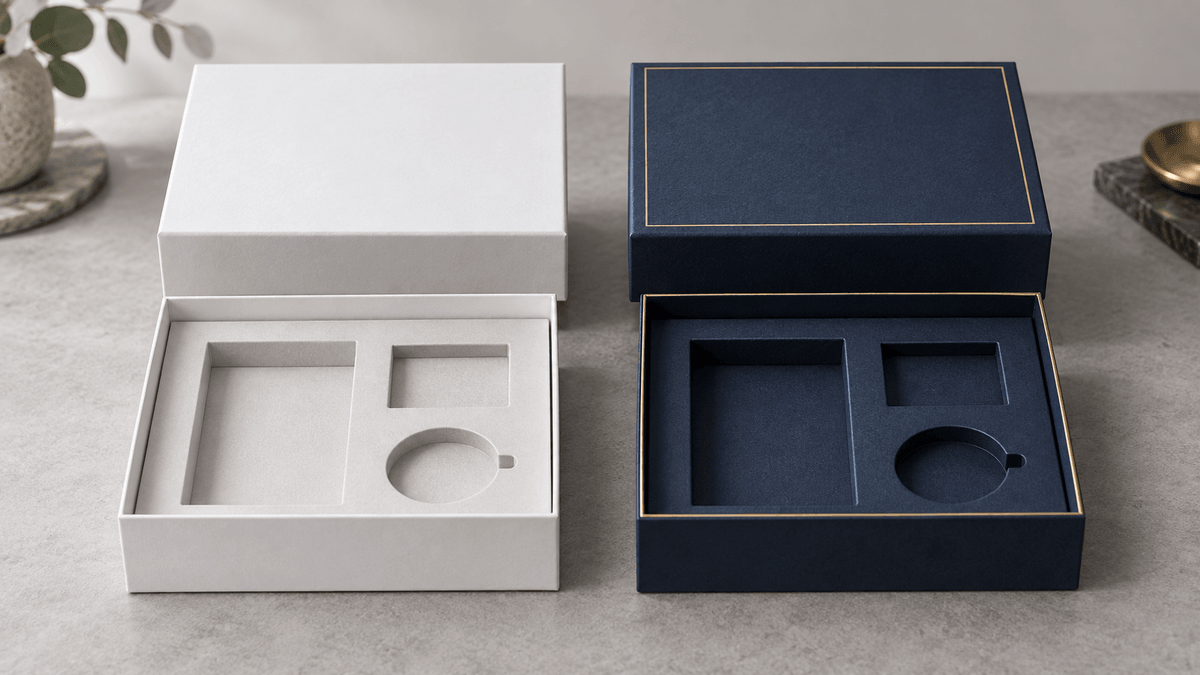
“Make a sample” can mean different things to different buyers.
Before payment, both sides should define the exact sample scope.
A packaging development project may include one or more of the following:
- A white structural prototype
- A printed outer box
- A fitted insert
- Printed internal components
- Foil stamping
- Embossing or debossing
- Spot UV
- Ribbons, magnets or pull tabs
- Sleeves or paper wraps
- Instruction cards
- Product placement testing
- Photos and videos
- Physical sample shipment
The buyer should know whether the first paid sample is intended to confirm structure, visual appearance or both.
White prototype
A white prototype is primarily used to confirm:
- Dimensions
- Structure
- Product fit
- Insert layout
- Opening experience
- Product removal
It is especially valuable when the product has an unusual shape or the original concept has not yet been structurally verified.
Printed sample
A printed or color sample is used after the structure is sufficiently stable. It helps confirm:
- Artwork placement
- Color direction
- Material appearance
- Logo position
- Finishing combination
- Overall presentation
Many custom packaging samples are cut and assembled by hand rather than produced through the complete bulk-production die-cutting setup. As a result, a handmade sample may show small cutting, wrapping or alignment differences that are normally more consistent in mass production.
For a more detailed explanation of development costs, read How Much Does a Custom Packaging Sample Cost?.
Decision 5: Is the Artwork Ready—or Is It Still a Visual Concept?
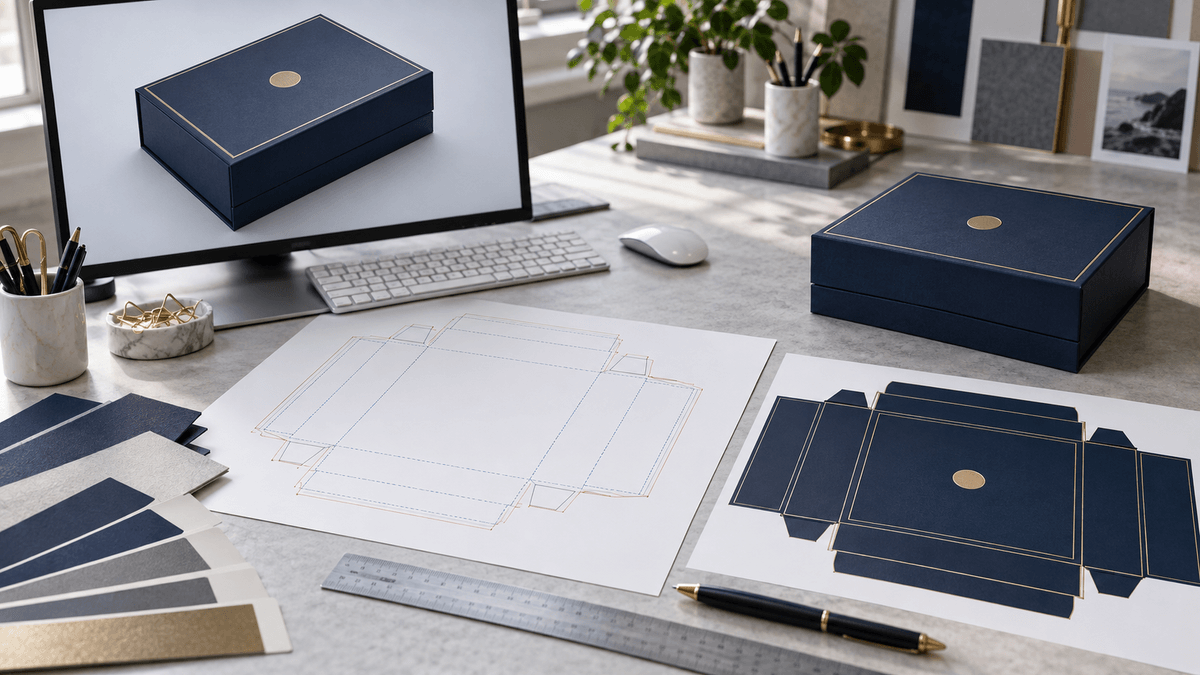
An attractive image does not necessarily contain the information required for printing and manufacturing.
Before sampling, identify the current artwork status:
- AI-generated concept image only
- Reference image plus logo
- Brand guidelines available
- Editable design file available
- Artwork placed on a confirmed dieline
- Production artwork ready for checking
An AI image may communicate the intended color, style and opening direction, but it cannot confirm exact dimensions, cut lines, fold lines, bleed, insert construction or finishing positions.
If the packaging structure has not been confirmed, final artwork should not be prepared too early. Structural changes may alter the dieline and require the design to be adjusted again.
The usual sequence is:
- Confirm the feasible structure
- Verify the size and product fit
- Approve the white prototype where required
- Prepare or confirm the dieline
- Place the design on the dieline
- Review the production artwork
- Produce the final printed sample
QX Packs can provide a dieline after the structure and dimensions have been confirmed. The buyer’s designer can then place the artwork into the correct panels.
If the buyer does not have a packaging designer, design assistance can be discussed as a separate paid service.
For a detailed explanation, read AI Packaging Images Are Not Production-Ready Designs.
Decision 6: Who Will Approve the Sample?
Sample development often slows down when several people review the packaging but no one has final approval authority.
Before sampling begins, confirm:
- Who is responsible for structural approval
- Who approves the artwork
- Who approves color and materials
- Whether the product team must test the fit
- Whether the brand owner or distributor must approve
- Who can authorize the bulk order
- The required approval date
Feedback should ideally be consolidated into one clear revision list.
For example, one person may request a smaller box while another requests a thicker insert and a third changes the product arrangement. If these decisions are provided separately, one change may invalidate another.
It is also important to distinguish between a correction and a new direction.
| Typical corrections | New development directions |
|---|---|
| Adjusting the insert cavity | Changing from a drawer box to a magnetic box |
| Moving the logo slightly | Adding a second product configuration |
| Correcting text | Replacing the insert material |
| Refining a fold or closure | Changing the product dimensions |
| Adjusting a confirmed color direction | Adding accessories not included in the original scope |
| Minor alignment or positioning adjustment | Replacing the complete artwork concept |
A major change may require a new dieline, new materials, a revised quotation or an additional sample. Defining the approval process early helps prevent open-ended revisions.
Decision 7: Is There a Realistic Bulk-Order Direction?
A custom sample should support a credible production project.
Before sampling, confirm the likely bulk-order direction:
- Expected quantity per design
- Number of designs or SKUs
- Target production period
- Destination country
- Planned sales channel
- Required launch date
- Whether all products use the same structure
- Whether the order depends on retailer or internal approval
“1,000 boxes” can mean one design of 1,000 pieces or ten designs of 100 pieces each. These are not necessarily the same production situation.
Printing plates, foil dies, cutting dies, material preparation and machine setup may be required separately for different designs, dimensions or structures. Therefore, the quantity per design should be discussed before the sample specification and bulk estimate are treated as final.
If the project is still for personal use, a very small one-time requirement or an unconfirmed product idea, fully customized rigid packaging may not be the most economical solution.
Being transparent about the expected production plan allows the manufacturer to recommend a more suitable development path.
Sample-Readiness Checklist
Use this checklist before paying the sample fee.
| Decision | Ready to sample when |
|---|---|
| Budget direction | The preliminary cost range is commercially acceptable |
| Box specification | Structure, materials, insert and finishes are understood |
| Product information | A physical product or reliable dimensions are available |
| Sample scope | Both sides know exactly what will be produced |
| Artwork status | The available files and remaining design work are clear |
| Approval process | One responsible contact can consolidate feedback |
| Bulk-order direction | Quantity per design, timing and destination are realistic |
If several items remain unclear, the project may need a specification review before paid sampling begins.
What to Send When You Are Ready for Sampling
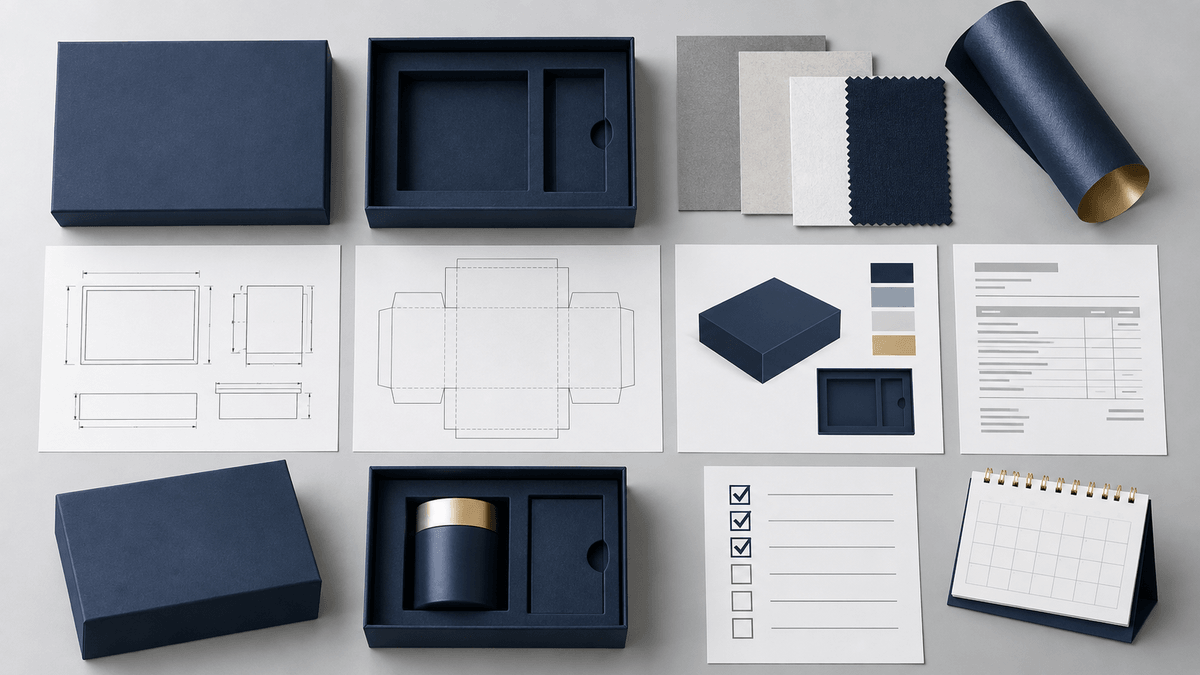
To move efficiently from quotation to sample development, send:
- The quotation or specification being confirmed
- Product photos
- Accurate product dimensions
- A physical product sample, if available
- Expected quantity per design
- Editable logo or artwork files
- Brand color references
- Required sample components
- Delivery country
- Target approval date
- The name of the final decision-maker
If the product is available from a supplier in China, ask whether it can be shipped directly to QX Packs for measurement and fit testing.
What Happens After These Decisions Are Confirmed?
Once the sample scope is clear, QX Packs can confirm the appropriate development sequence.
Depending on the project, this may involve:
- Receiving or reviewing the product
- Confirming the structural direction
- Producing a white prototype
- Reviewing the fit through photos, video or a physical sample
- Providing the confirmed dieline
- Checking the final artwork
- Producing the printed sample
- Confirming any adjustments before the bulk order
The purpose of these steps is not to make the process unnecessarily long. It is to resolve structural and design decisions in the correct order.
For an overview of the full project path, see the custom packaging process from inquiry to production.
Frequently Asked Questions
Should I pay for a sample before sending the actual product?
For a simple box with confirmed dimensions, a physical product may not always be necessary. For fitted inserts, irregular products or premium presentation packaging, sending the actual product before final structural sampling is strongly recommended.
Can QX Packs quote from an AI-generated packaging image?
An AI image can be used as a visual reference for a preliminary discussion. A quotation still needs practical assumptions about the structure, dimensions, materials, finishes, insert and order quantity. The image itself is not a production specification.
Do I need final artwork before making a white prototype?
Usually no. A white prototype is intended to confirm the structure, dimensions and product fit. Final artwork is normally placed after the structure and dieline are confirmed.
What if I do not have a packaging designer?
QX Packs can provide the confirmed dieline for your designer. If you do not have a designer, paid design assistance can be discussed separately according to the project scope.
Why might the printed sample look slightly rougher than bulk production?
Many custom samples are cut, wrapped and assembled manually. Bulk production uses production dies, machine processes and standardized assembly controls, so some edges or alignment may be more consistent in the final order.
Can I approve a sample without having it shipped to me?
Some buyers approve the sample using detailed photos and videos. Others prefer to receive the physical sample for product testing and internal approval. The appropriate method depends on the packaging complexity and the buyer’s approval requirements.
Can I change the packaging after seeing the sample?
Reasonable adjustments can normally be discussed before bulk production. Major changes to the structure, dimensions, materials or artwork may require a revised quotation, updated dieline or another sample.
Does paying a sample fee mean the bulk price is final?
Not always. The bulk quotation remains accurate only if the confirmed sample follows the quoted structure, materials, finishes, dimensions and quantity assumptions. Changes made during development may affect the final production price.
Final Takeaway
The most productive time to clarify a packaging project is before paid sampling begins.
A preliminary quotation confirms a possible direction. A successful sample requires a defined structure, reliable product information, an agreed development scope, a workable artwork plan and a realistic bulk-order objective.
When these seven decisions are confirmed, the sample becomes more than a presentation piece. It becomes a practical bridge between the original packaging concept and repeatable commercial production.
QX Packs has supported custom packaging projects in Shenzhen since 2004, including rigid boxes, folding cartons, custom inserts and retail packaging. If you have received a preliminary quotation and want to confirm whether your project is ready for sampling, send us the current specification and product information for review.